
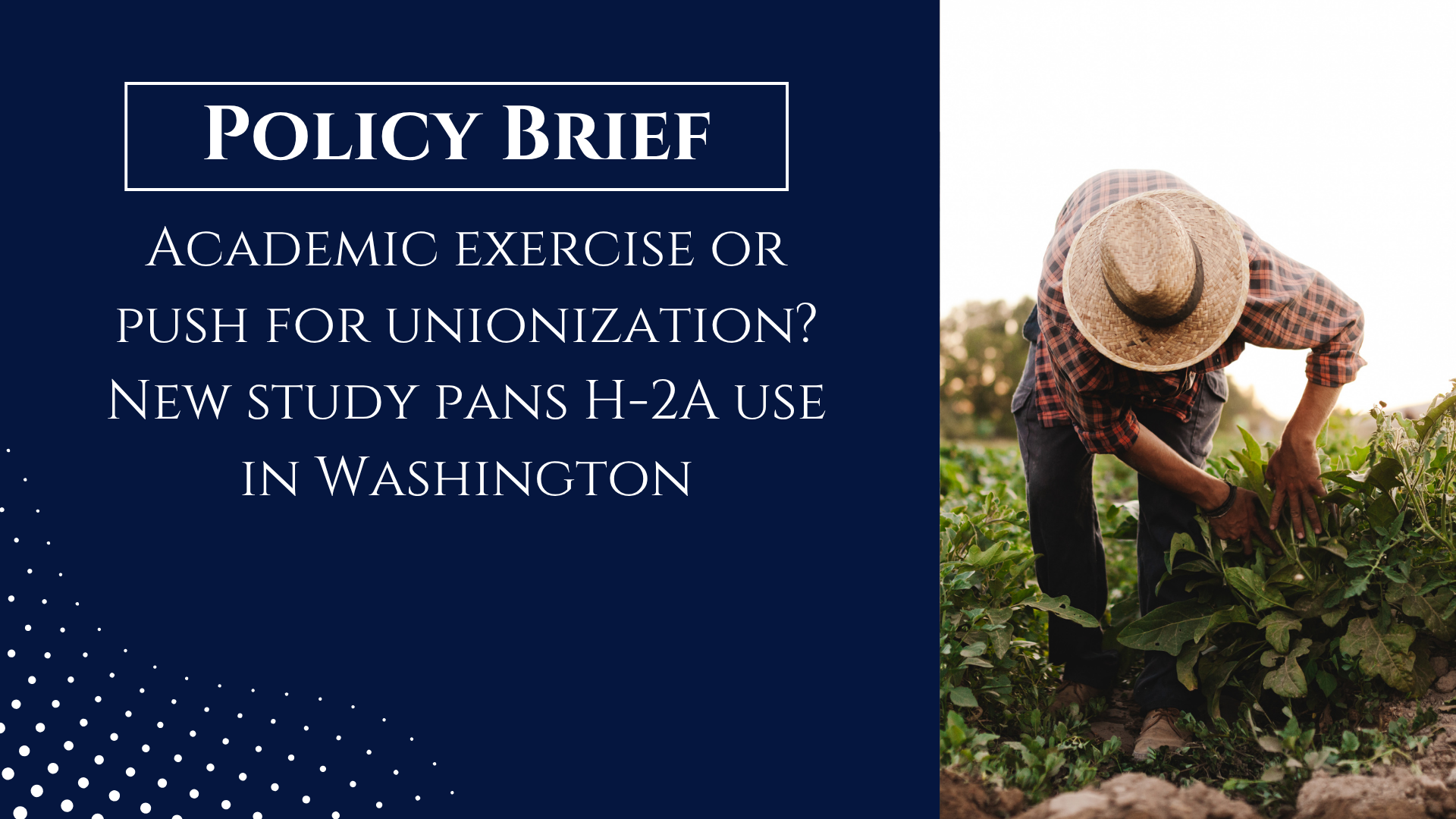
This year’s legislative session featured proposals to “modernize” agriculture through the forced creation of collective bargaining units. Many activists and legislative advocates persistently implied farmers and ranchers were backward and uneducated, going so far as to cast food producers as “plantation owners.”
These aspersions are beneath the open-minded, liberated state Washington believes itself to be.
Home to tree fruit orchards, grain growing operations, hop farms, livestock ranches, potato farms, egg farms, and about 300 other types of commodity producing operations, Washington state is one of the most agriculturally diverse states in the country. It is the envy of agricultural states for its soil content, access to water, and sunny climate on the east side of the mountains.
In Washington state, as in every state, agriculture is a minority. Less than 2 percent of the total U.S. population produces enough food to feed the rest of the country with excess. This marvel of science, technology, and ingenuity blends to create a remarkable food system. If there is a word that should be used to describe our farms and ranches by people who do not live or work on them, it should be something superlative. Not because our food producers are better than any of the numerous groups of people who provide necessary services but because they, too, are providing something wholly necessary – food.
Despite what many might think, our agricultural community is vast and diverse. Many food producers hold a university degree. Most producers attend at least one continuing education class or conference annually. Almost all our producers are willing to attend international trade missions to meet with consumers in virtually every marketplace across the globe.
Our state boasts producers and workers of many cultures and backgrounds including Sikh, Muslim, Thai, Iraqi, Hindu, Mexican, Jamaican, Native American, Pacific Islander, Korean, Japanese, African American, Dutch, Portuguese, Catalan, and many, many more. Washington state’s farms and ranches are ahead of the curve in number owned and operated by women and most of our producers are under the age of 64.
Still, we are labeled as “old, white men” who oppress others.
For example, a dairy in our state employs an individual with a computer technology degree and fluency in several languages. That person grew up in a farmworker family on that dairy. After moving away to pursue a degree in computer technology and entertaining six-figure salary offers from tech firms, that individual decided, instead, to return home to work alongside family and friends.
The words we use to describe the people who grow food for us matter. The things said about the more than 164,000 people directly employed in the feeding of the nearly 8 million people who reside in Washington state matter.
When we besmirch people who are different than we want them to be in any other part of life, it is considered wholly unacceptable. As both a culture and society, we have deemed some labels and language inappropriate, regardless of context or the desire to cause a response.
It is time for that standard to apply to our agricultural community, too.
Ultimately, food, the people involved in its production, and the language we use to discuss it and its creation, should be aspirational, not divisive. When people with no experience in agriculture, but who benefit from the fruits of its labor, use language meant to demean and belittle those who participate directly in food production, they are not ironic or making a bold statement. They are perpetrating an injustice against the very people who ensure they will not go hungry the next time they sit down to a meal.