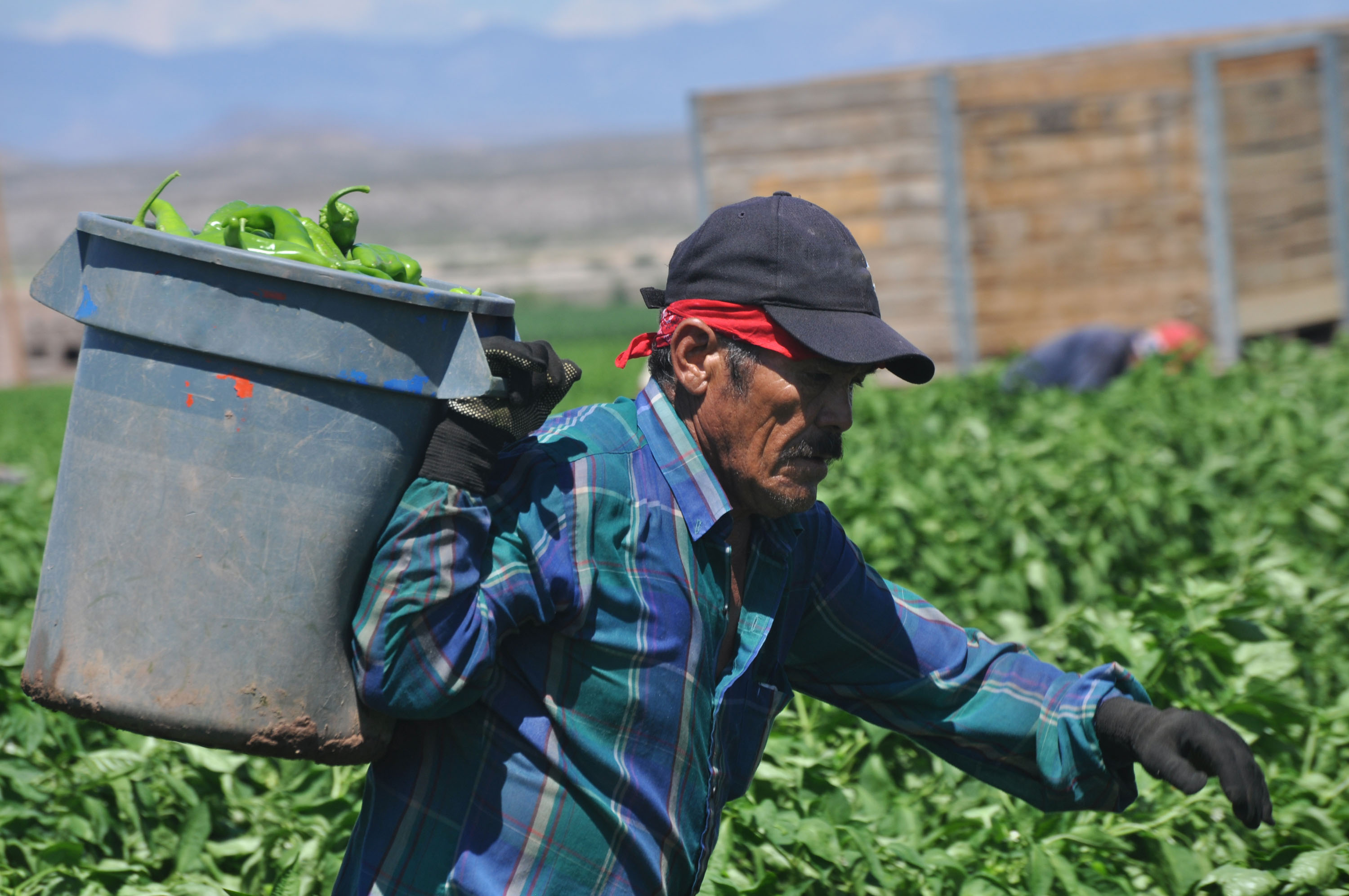


The breakfast tacos and tamales were hot, and the faces were familiar for nearly every farmworker settling into the family style rows of tables set up for a recent H-2A onboarding at a tree fruit farm in central Washington.
“Thank you for coming back to work with us again for another year. We could not do this without you,” was the welcome message from their employer.
Washington state has a rocky relationship with the H-2A farmworker visa program.
Under the H-2A farmworker visa program, employers must advertise locally for at least 60 days before the start of work to prove there are no local workers willing and able to fulfill their needs. Once that need has been certified as existing by both the state and federal governments, employers can then recruit farmworkers from abroad to legally work in the United States with a visa for up to 10 months while living in employer provided housing.
Farmworker activists say the program undercuts wages paid to local workers and drives local workers out of the job market. They are quick to note there are local workers available – they just don’t have legal status to work in the U.S.
That is a significant problem for employers. Knowingly hiring workers with no legal status to work in the U.S. comes with a hefty price tag; the first offense can start at $698 per worker and range up to $27,894 per worker for subsequent offenses under the Immigration Reform and Control Act.
Activists also claim the program is more like indentured servitude, forcing workers to remain working for employers they don’t like or where problems occur with no resolution. However, during the recent onboarding, all but one farmworker was a returning hire from Mexico. All the workers were provided an extensive bilingual packet of materials that included their contracts, wage rates, information about human trafficking and their rights as employees, the farm’s complaint structure, and direct lines for heads of human resources. All the written information was also verbally presented in Spanish, and everyone was encouraged to ask questions in either the group setting or privately if they were not comfortable speaking in front of the group.
To add to the levels of support provided to the newly arrived workers, presentations from the Washington State Employment Security Department, the Mexican Consulate, and the county sheriff’s office were all provided in Spanish, outlining the workers’ rights, providing contact information and ways to reach people in each agency, and providing time for questions.
The farm also encouraged workers to submit any additional receipts for travel expenses they had incurred on their way to the onboarding.
“We used to do payday loans for each of our workers, so they had money when they arrived,” a representative with the farm said. “We realized it was better to reimburse travel expenses when our guys arrive. Then they have some money in their pockets until their first paycheck.”
Along with the discussion of travel reimbursement and their new contracts for the year, farmworkers were given an explanation of the new Adverse Effect Wage Rate (AEWR) methodology implemented earlier this spring. Under the new AEWR, H-2A visa holders will be paid Washington state’s minimum hourly wage rather than an escalated wage as they would have been in years’ past. For workers at this farm, the contract offers an incentive to earn more by adding in opportunities for piece rate work throughout the orchard season. The piece rate varies by assignment and is optional rather than compulsory, making it a working bonus for those who wish to take advantage of it.
“We are trying to find a balance,” the farm representative said. “We want to offer the guys an opportunity to earn as much as they want.”
Shifts are also outlined in the contracts for the farm with schedules delineated as 6:30 a.m. to 1 p.m. Monday through Friday with 30 minutes for lunch and two mandatory 10-minute breaks, one in the first “half” of the day and one in the second, and a 5-hour shift on Saturdays, for a total of 35 hours a week.
If there was a theme for the day, it seemed to be transparency. Farmworkers were free to ask questions, joke with senior staff and friends, and settle in for another year of work; the employer answered questions and openly made note of the areas of concern brought forth by the workers.
The H-2A farmworker visa program is not perfect.
But it is a program that still provides farmworkers the opportunity to make a living for their families in a safe, legal manner. The nearly 200 men having breakfast while being reminded of their rights, anticipated wages, and what they could expect in the months to come, were comfortable having an open dialogue with their employer and preparing for the next steps on their journey. If there are changes to be made in H-2A policy, they should be made while remembering that people are at the heart of the program, people who make our state richer for their presence here.