

The Seattle City Council has voted to place a .3% sales tax on the November ballot, doubling the .15% tax that is due to expire in April of 2027. If voters approve the tax it will generate about $138 million per year to subsidize Metro bus service in the city. Metro already receives over $650 million per year from a county-wide sales tax, plus state and federal grants and fare revenue that brings the total to well over a billion dollars per year.
The City’s website claims the tax will cost the median two-person household only $58 per year. However, when we divide $138 million by Seattle’s 393,135 households the average comes out to $351 per year. Over the ten years the tax would be in effect the total cost per household comes to more than $3,500, which will add to the cost of living at a time when the city is already becoming unaffordable for many lower income families.
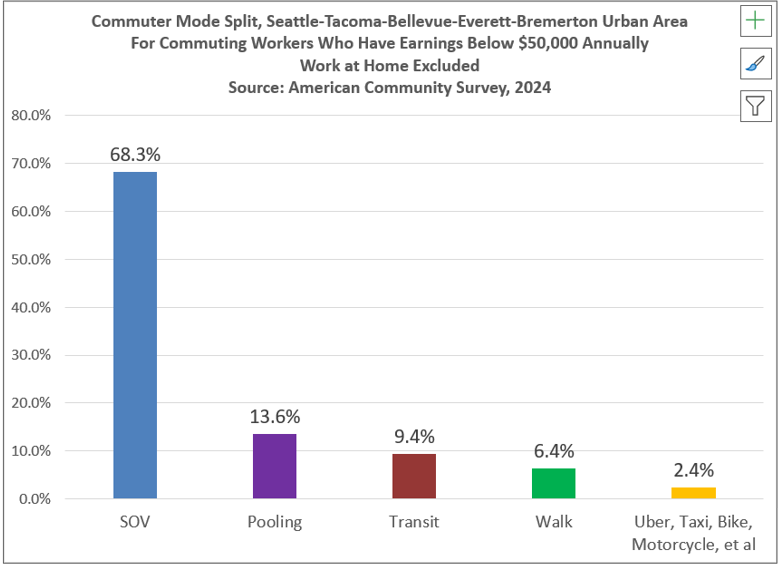
The increase would bring the total sales tax in Seattle to 10.8%, the highest sales tax rate of any major U.S. city. The tax increase has been described as “progressive”, apparently because transit is regarded as a progressive public service. In fact, the tax is highly regressive, it hits the working poor hardest. Transit service is important for a segment of the population, but Census data for the Puget Sound region shows that only 9.4% of low-income residents commute by transit, which means 90% will be paying the tax but not receiving much in the way of benefits (see graph below). The tax proposal includes funding for subsidized transit passes, which is a benefit for those who take the bus, but it doesn’t help the majority of the working poor who commute by automobile.
In putting the proposal together the Mayor and Councilmembers quickly decided on the maximum tax increase state law allows, and to spend all of it on transit rather than allocating a portion of the revenue to Seattle’s underfunded street and bridge maintenance. SDOT’s analysis shows that deferring overdue street preservation results in much higher costs in the future, so the choice to exclude street maintenance means the condition of city streets will continue to deteriorate and taxpayers will eventually be faced with further tax increases to cover the cost of repair.
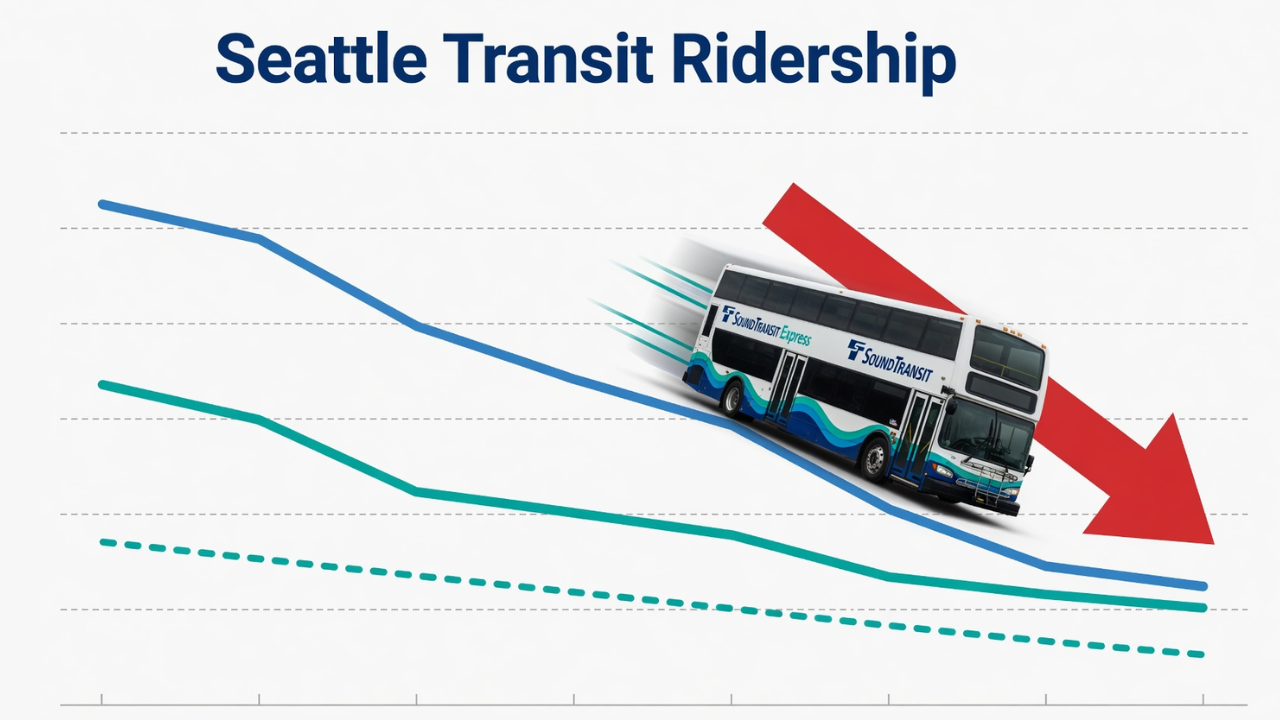
The Council deliberated at some length about the transit services and facilities to be funded with the $138 million per year, but the crucial question of whether those expenditures would actually increase ridership wasn’t addressed. While it is natural to assume spending more on transit will boost ridership that hasn’t always been the case. For example, between 2012 and 2024 Metro’s total revenue adjusted for inflation increased by more than 40%, but during that period ridership fell by 27%.
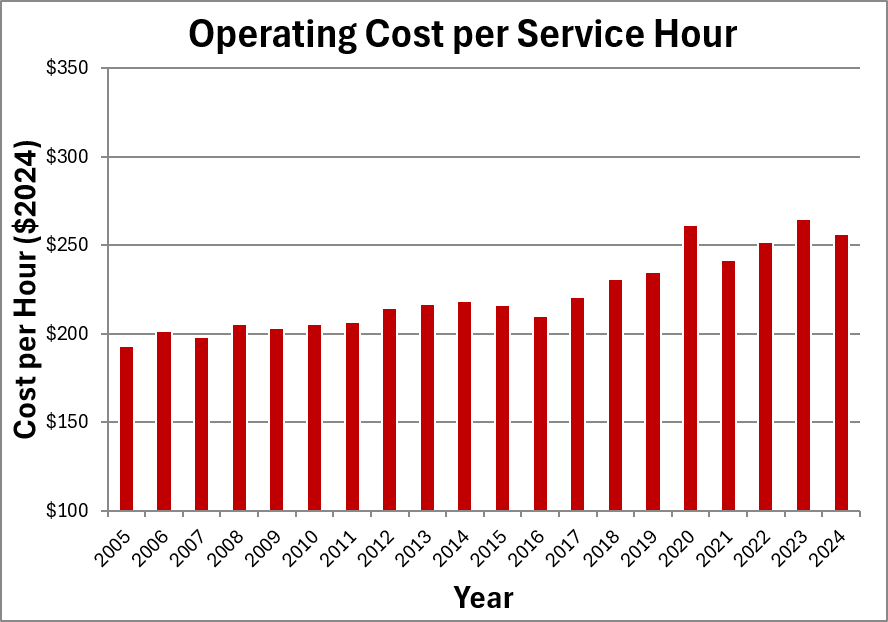
Much of the decrease in ridership has been attributed to the COVID pandemic, but it is also clear the shift to remote work (and shopping, and entertainment) is not going away. At the same time, Metro’s operating costs have trended upward and now exceed $250 per service hour (see below). As a result, the City may double the subsidy but they won’t receive double the service, and it isn’t clear how much, if any, ridership will increase.
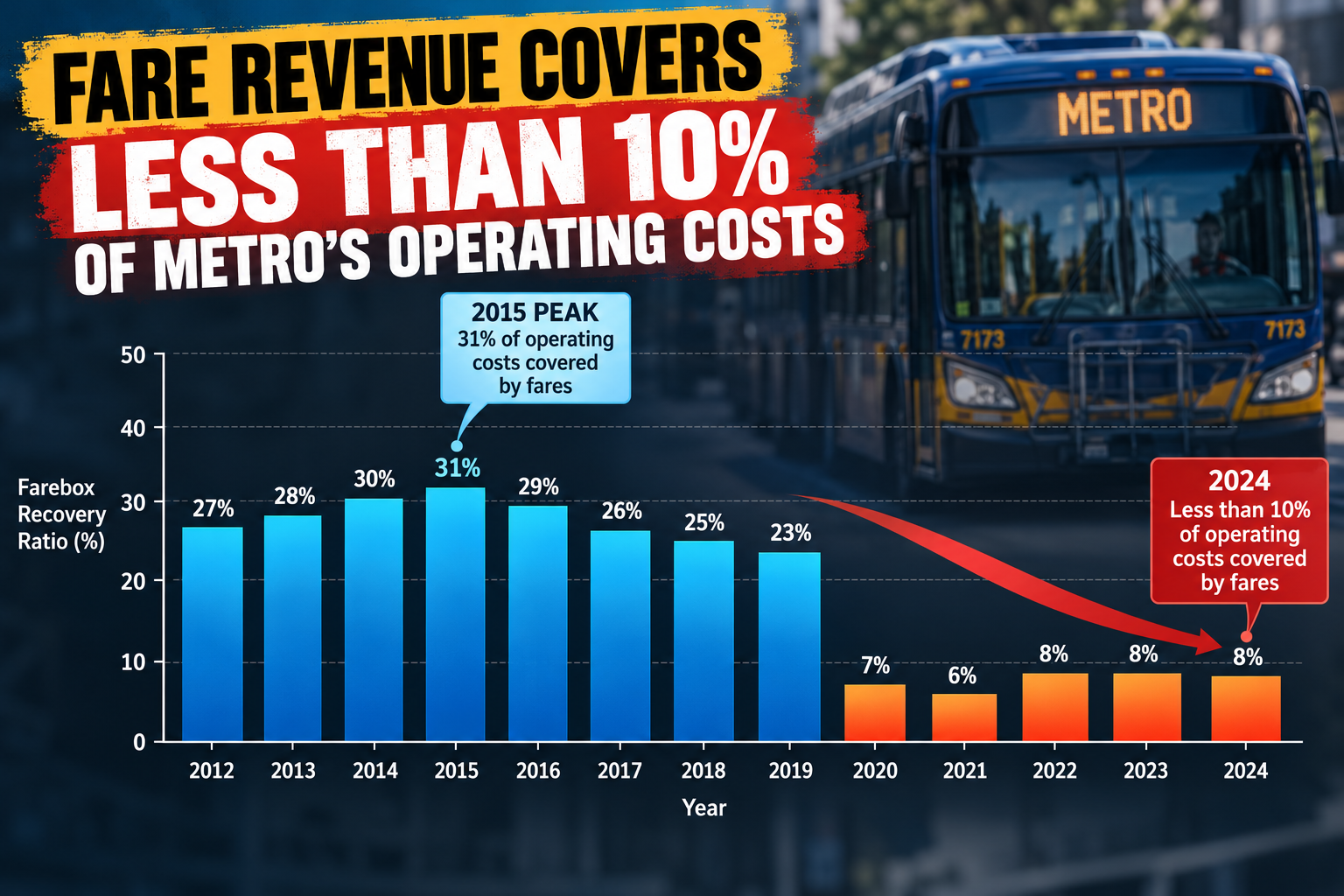
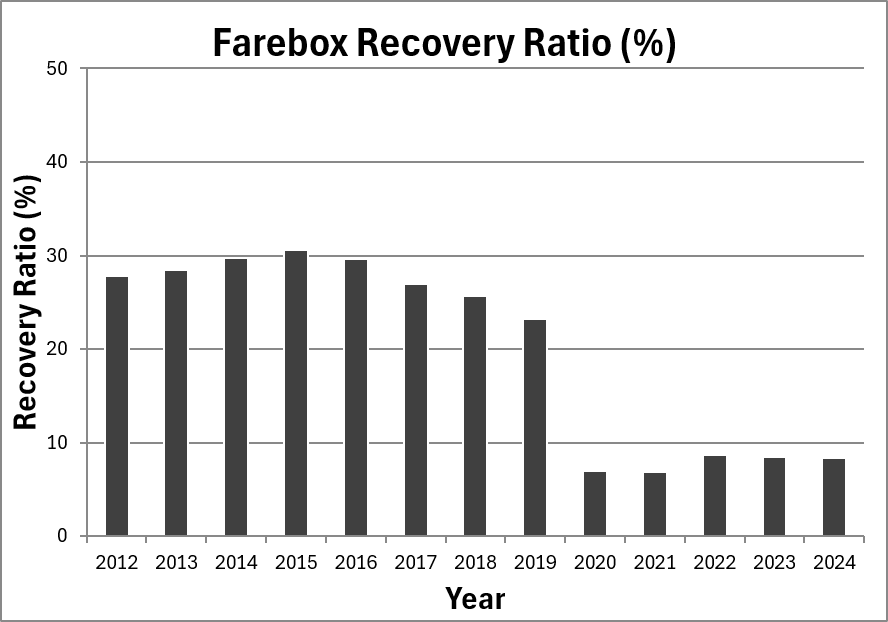
City residents feeling tax fatigue from all the recent tax and fee increases may wonder why Metro doesn’t cover more of its costs with farebox revenue. A dozen years ago Metro’s fare revenue usually covered about 30% of operating costs, which was one of the best recovery ratios among transit agencies in the state. However, the trend was heading in the wrong direction even before the COVID pandemic. In 2020 the ratio plunged and in 2024 was still less than 10%, which means taxpayers now pay for 90% of the cost of providing service.
The Mayor and City Council don’t appear to have given Metro’s ridership and cost trends much consideration while debating the tax. Now the proposal will go to the voters. Seattle residents would be well advised to give those questions careful consideration when deciding whether the transit services subsidized by the tax justify the higher costs all consumers in the city will pay.