
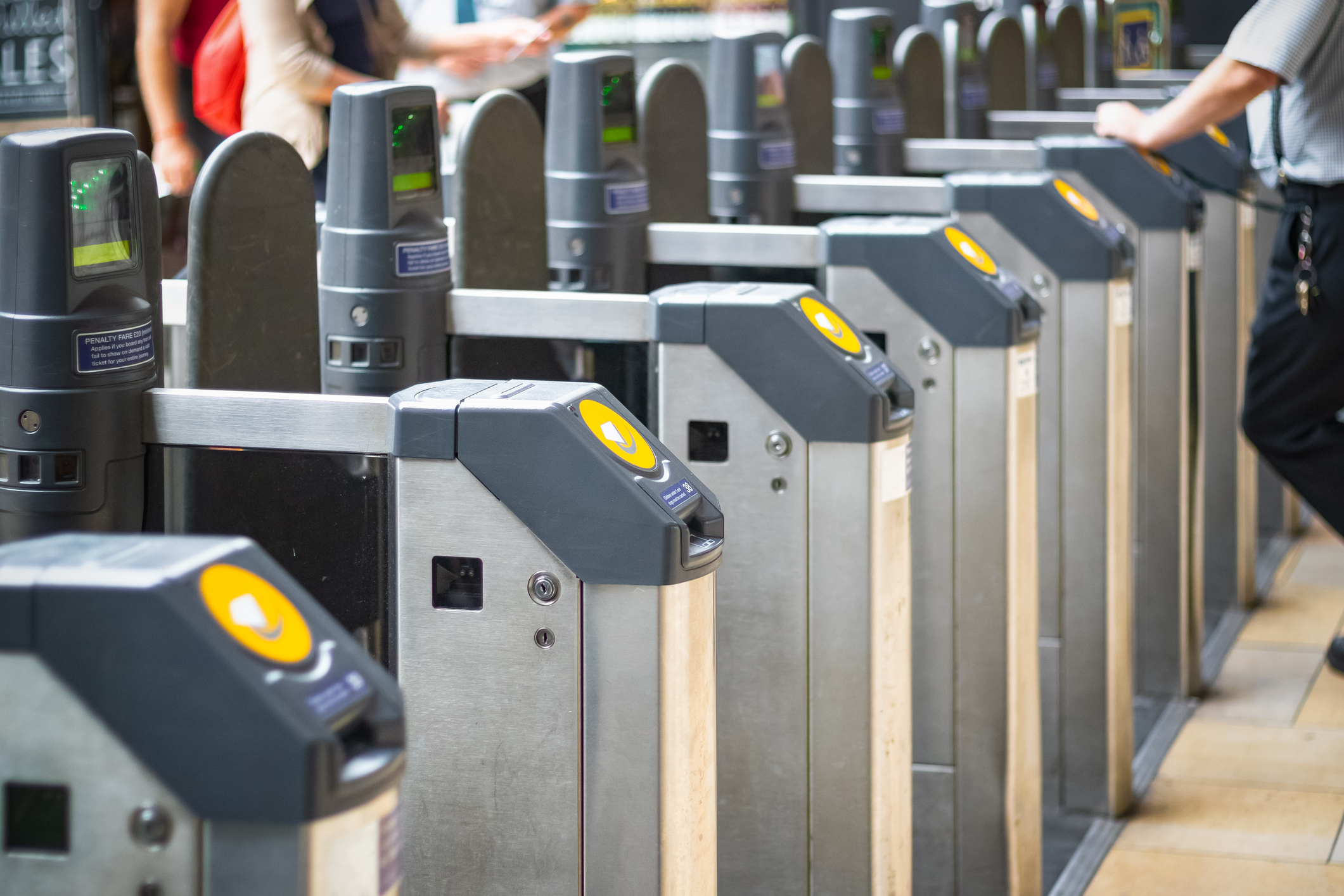



In the mid-1990s as the Sound Transit plan was taking shape important decisions were made that would later prove problematic. One of those decisions was to build stations without turnstiles and to rely on the honor system for fare payment. This had the advantage of reducing construction costs and allowing barrier-free station platforms, however, it did create the possibility of losing fare revenue if customers failed to pay.
At the time I was working for Community Transit in Snohomish County and had frequent interaction with the staff putting together the Sound Transit plan. One day they inquired about Community Transit’s experience with fare payment and evasion. Like most transit agencies in that era Community Transit still collected fares via monthly passes and cash, with fares paid upon boarding. The ORCA card was early in its long gestation and still years away from implementation.
Detailed fare collection data was available but there was no accounting of fares evaded (which could take the form of somebody using an expired transfer, invalid pass, or simply failing to pay). To estimate evasion, ridership counts were compared with fare revenue collected. This indicated an evasion/underpayment rate of only a few percent.
Metro Transit was also asked about their experience with fare evasion, which I believe they estimated at 5% or less. At the time Metro had a large fare-free zone through downtown Seattle that made it difficult to estimate fare evasion with any precision, but evidence suggested the problem was limited.
With that information Sound Transit proceeded to design a system and stations without gates or turnstiles. As subsequent events have shown, that decision was altogether too optimistic, and the cost of correcting it now will be high.
With the onset of the COVID pandemic in 2020 Sound Transit suspended fare collection. When efforts were made to re-impose fares in 2023 it was discovered that many riders preferred riding for free. In 2024 “non-revenue boardings” were estimated to be 44%, though that figure includes students who are allowed to ride free. In 2024 Sound Transit stepped-up fare collection using “fare ambassadors”, but evasion was still rampant and it wasn’t practical to have a fare enforcement officer on each light rail car. By 2025 Sound Transit was losing tens of millions of dollars a year in uncollected fare revenue at the same time the agency acknowledged billions of dollars in cost increases for light rail extensions. Revenue losses that were tolerable (barely) during COVID were now deemed unacceptable.
Faced with these challenges, the Sound Transit board has approved a pilot program to install fare gates at fourteen light rail stations. That won’t come cheap; the estimated cost is $87 million, and there will be ongoing costs for monitoring and maintenance of the high-tech gates. Sound Transit hopes the fare gates will increase revenue by over $30 million per year. For an agency with a $34.5 billion budget shortfall that won’t come close to filling the gap, but it would be a small step in a positive direction even if it comes with a high up-front cost.
The original Sound Move Plan presented to voters in 1996 assumed fare revenue would cover 40% of light rail operating costs. That target has proven hard to achieve. In 2019 the farebox recovery rate was 30%, but during COVID the rate plunged and stood at 11% in 2024. The 40% target was no longer considered realistic so Sound Transit lowered the target to 22%. Even though fares constitute only a small share of Sound Transit's total revenue, the reduction has an impact on the agency's long-range financial plan, which had already been revised to assume billions of dollars in additional debt and an implementation timeline stretched years beyond the original completion date.
Three factors will make achieving even the lower target difficult. Increased ridership should help, but costs are also rising. From 2019 to 2024 the hourly operating cost for light rail increased by more than 39% to over $650 per vehicle service hour, with further increases expected. As light rail extensions are built total operating costs will also increase. Sound Transit’s own forecasts show the new lines are expected to attract far fewer riders than the central part of the system that is already in operation, which means costs are likely to rise faster than ridership. This will further reduce the farebox recovery ratio.
To boost fare revenue Sound Transit could raise fares, but even doubling the regular fare from $3 to $6 might not achieve the 22% target because the higher fare would suppress demand, which has never reached the levels assumed in Sound Transit’s original plan. Sound Transit may discover that some of their non-paying customers shift to riding Metro buses, where fare evasion is common and compliance is hard to enforce.
It should also be noted the pilot project only installs gates at 14 of the system’s 39 stations. That means somebody traveling between stations without fare gates, such as in the Rainier Valley, Mountlake Terrace or Tukwila, could easily evade paying a fare. Ultimately Sound Transit may figure out how to install fare gates at those stations, but that will add further millions of dollars to the cost.
The materials submitted for board consideration focused narrowly on fare evasion and operational issues with gates (such as trapping people who are unable to pay and the need for on-site staff). The bigger question, which seems to have entirely escaped their attention, is whether it makes sense to spend over $150 billion building light rail lines where fares cover only about a fifth of operating costs (if they are lucky). Such a costly system with poor operating economics is not what the voters were told they would get when the proposal was on the ballot. That’s the problematic decision the Sound Transit board needs to reconsider.