


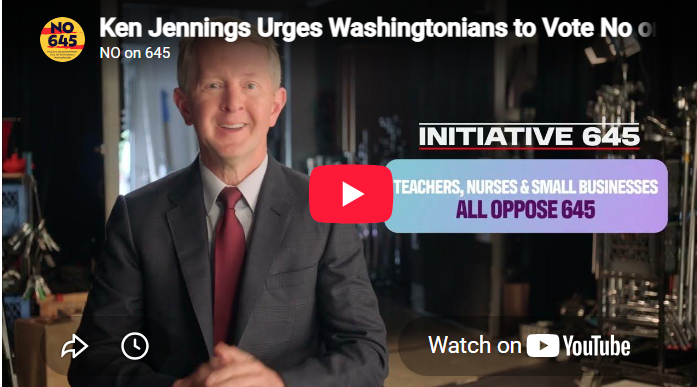


Gov. Bob Ferguson said he supports the latest version of a bill that would create an unconstitutional income tax in Washington state, moving it closer to the finish line. Supporters, including Ferguson, want people to believe the extra layer of taxation is needed to meet health care, education and other needs.
I want to touch on just one element of the latest version — "free” school meals for all school students — but be sure to stay up to date on Senate Bill 6346's progress on our website. It includes a recent piece about how Ferguson has abandoned his own tax-relief demands of an income tax. Ryan Frost, the budget and tax policy director for Washington Policy Center, writes, “The governor’s willingness to fold on a bill that so clearly violates his own public statements suggests that his commitment to taxpayer relief was more a matter of optics than a genuine legislative requirement.”
Back to “free” lunches. As you already know, there is no such thing. Still, the governor said in a statement on March 6, “I’m especially pleased that funding for a policy particularly close to my heart is included: Free school lunch and breakfast for all Washington students. Hungry kids can’t learn, and this funding puts money back in the pockets of Washington families.”
While hungry kids do have trouble learning, as a mom who spent time volunteering during lunch time in public schools, let me assure you that not all students will eat school meals even when they’re free. (It’s hard enough to get students to eat at home. And don’t get me started about the amount of food that students are required to take that ends up in the garbage.) Still, I’m all for a safety net for kids whose families’ incomes are determined to be too low to adequately support them. But this isn’t that.
Offering free meals for all kids means all kids — those in need and those not in need. Our state has a bad habit of creating safety nets for people who are not in need, often at the expense of those who are. Enter Paid Family and Medical Leave (PFML) and the WA Cares programs. Both tax low-income workers to benefit other workers, including those with higher wages. The state’s own numbers show that those making more than $61 an hour use PFML more than twice as much as the lowest-income workers.
For now, this free-meals-for-all-students provision would not be as upside down as PFML. It would be funded by an income tax on individuals and couples making more than $1 million a year. If the proposed income tax is expanded, however, as everyone expects, we could have another program that is said to be for people in need that actually harms people in need. Taking money from workers that in some cases benefits other workers who make far more money isn't good policy.
Taxpayers are already helping most students with meals. Read more about that from the Washington state Office of Superintendent of Public Instruction (OSPI) here and here. OSPI reports that during the 2024–25 school year, “nearly 70% of students in Washington state attend a school that provides free meals to every child enrolled.”
It’s odd to me that this free-lunch talk is a highlight for the governor and one of the main reasons he says he can now say “yes” to the proposed income tax of 9.9%. The tax on individuals and couples with an income of more than $1 million — again, for now — is estimated to generate $3.5 billion or more in annual revenue. Public estimates for the expanded meals policy are around $100 million a year and will take only about 3% of the annual tax haul.
Spending problem
This additional tax remains unconstitutional and unnecessary. Our state has a spending problem, as evidenced here, not a revenue problem. Priority-based budgeting could take us where we want to go while allowing us to continue offering adequate safety nets.
Another sweetener in the latest version of SB 6346 is expanded eligibility for the state’s Working Family Tax credit. That offers more of what I have been talking about. State Sen. Chris Gildon, R-Puyallup, the lead Republican budget writer, summed it up well in this statement: “It seems Governor Ferguson was swayed by the major expansion of eligibility for the Working Families Tax Credit,” Gildon said. “I question whether gifting money back to a single filer with an income of $115,000, as the House rewrite would allow, is the sort of tax relief the people of our state need most.”
Instead of an income tax, lawmakers need to curb state spending and reserve taxpayer generosity for people in need. Instead of safety nets for all, lawmakers should let Washington state workers keep more of their own earnings for their own needs and so they don't end up needing taxpayer assistance.