The November ballot will give Seattle the opportunity to vote on a proposal to double the city’s existing .15% sales tax for Metro to .3%. That tax is on top of the .9% sales tax Metro already collects county-wide. If approved, the higher tax will be in effect for ten years and generate about $138 million per year.
Before casting a vote, residents would be well advised to consider facts that weren’t discussed by the City Council as they were putting the proposal together. Challenges include:
Rising operating costs – The cost per hour of Metro bus service has been rising faster than inflation for more than a decade. Since 2016 the hourly operating cost has increased by more than 20% to over $250 per service hour. As a result, Seattle’s dollars won't buy as many service hours.
Productivity has decreased and ridership is lower today than ten years ago – In 2015 Metro bus service averaged more than 36 passenger boardings per hour. By 2024 productivity had fallen to less than 25 boardings per hour. Total bus, trolleybus and streetcar ridership decreased from 121 million trips in 2015 to only 84 million trips in 2024.
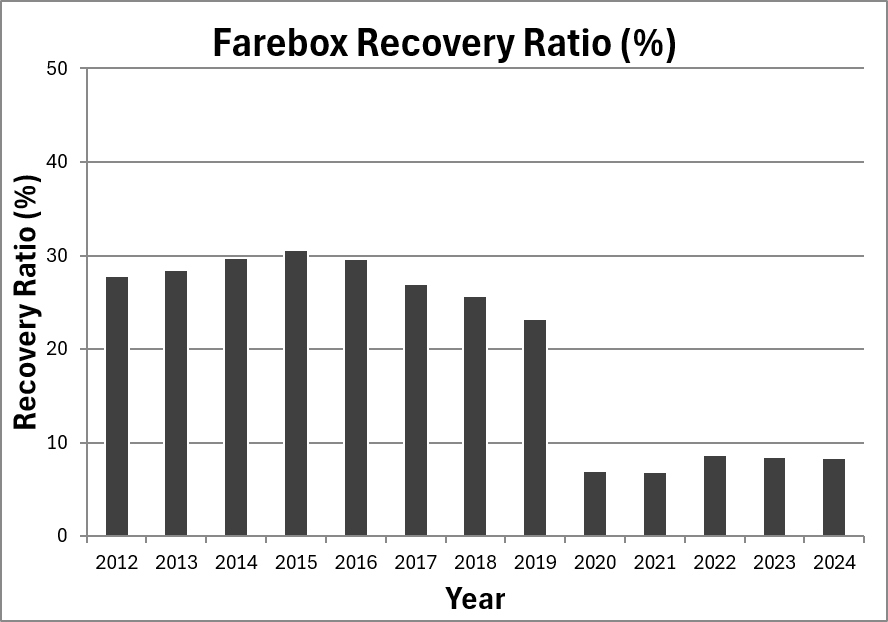
Fare evasion – Metro estimates that about 35% of riders don’t pay a fare. This translates into tens of millions of dollars per year in lost farebox revenue. In 2016 Metro collected over $165 million in fares, by 2024 fare revenue had fallen to $84 million. Fares now cover less than 10% of operating costs, which shifts the burden onto taxpayers for the other 90+%.
None of these fundamental challenges will be addressed by the city’s proposed sales tax increase. Costs will continue to rise, service productivity is unlikely to improve, and fare evasion will continue to cost tens of millions of dollars per year requiring greater taxpayer subsidy.
A better informed proposal could have been crafted if the city had bothered to look at what the expiring levy has produced. Despite the city’s subsidy Metro provided fewer total hours of service in 2024 than they did in 2019, and total passenger miles across all Metro services fell by about 40%. Before throwing more than $100 million per year at Metro the city should work with King County to devise a transit plan that provides a better return on investment.
Supporters of the tax increase claim it will result in “Better Air and & Less Traffic for all of us”. That would be nice, but there is reason to doubt it will accomplish that. Much of the additional service is planned for nights and weekends when there isn’t much congestion so the impact on traffic will be negligible at best. The hoped-for benefits also depend on improving bus service so much that people choose to drive. However, as the data shows, over the last ten years increased transit revenue hasn’t produced higher ridership or a higher transit mode share so it is doubtful the increased service will have an impact on air quality.
Supporters have also suggested the increased subsidy will help make transportation service more equitable (though what constitutes “equitable” isn’t defined). We should keep in mind that the sales tax is highly regressive and the increase will saddle city residents with a sales tax rate of 10.7%, the highest of any major city in the United States. This will make the city’s affordability problem worse and put businesses at a competitive disadvantage compared with less heavily taxed cities.
Seattle does have significant unfunded transportation needs. For example, SDOT has reported that 35% of the city’s streets are in “poor” or “very poor” condition. The enabling legislation that allows the city to levy a tax for transportation gives the city broad latitude in how the funds are used. Most of the more than one hundred transportation benefit districts created around Washington have used the tax revenue for repaving streets, repairing bridges, fixing sidewalks, and similar improvements to city transportation infrastructure. Seattle decided they would use all the revenue for transit, which will result in further deterioration of city streets and much higher costs for complete reconstruction when the city finally gets around to the needed work. That hidden cost, easily hundreds of millions of dollars, hasn’t been mentioned by the City Council or the Mayor.