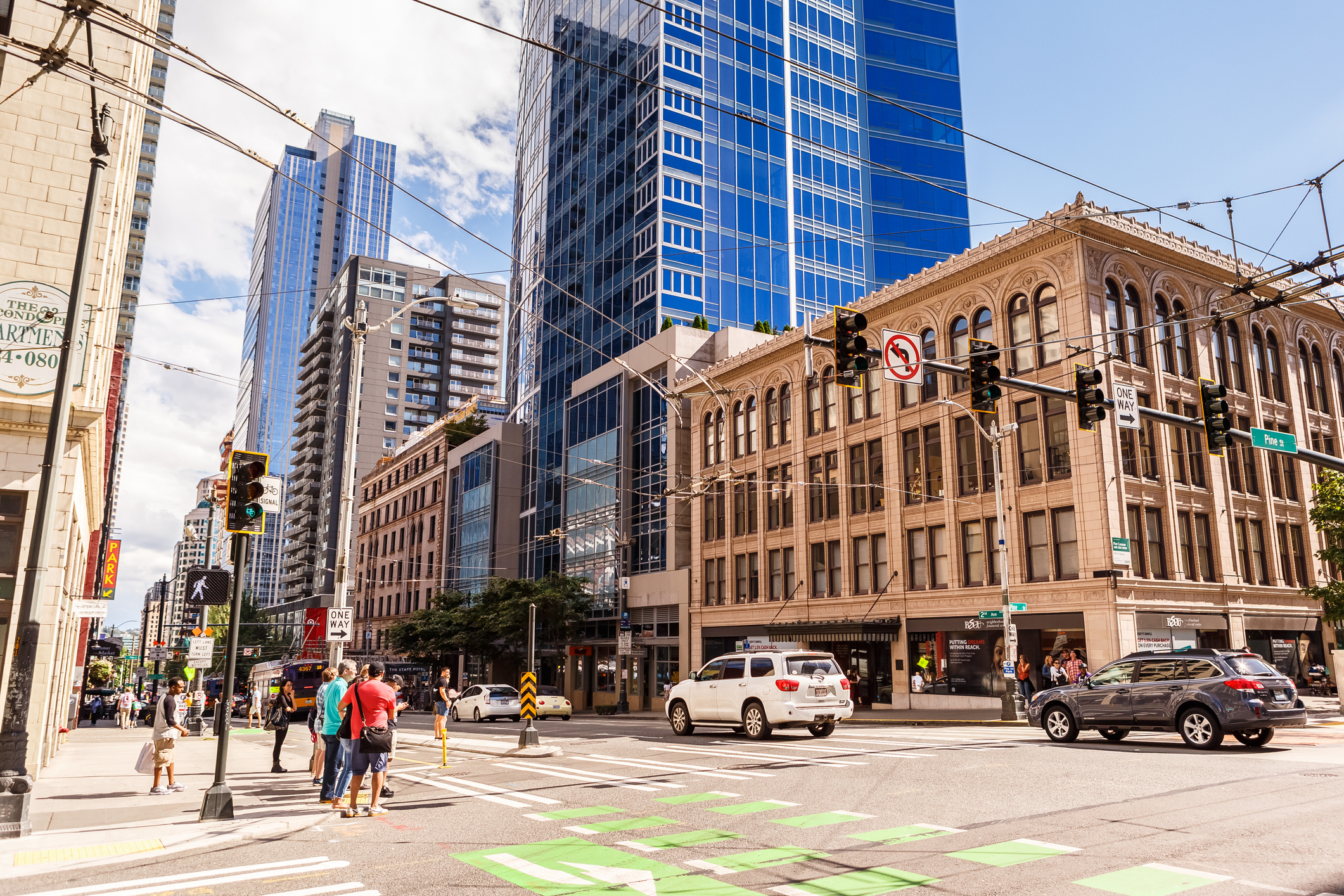

More than twenty years ago planners began to advocate policies emphasizing multi-modal use of public rights-of-way. This came to be known as a “complete streets” approach to urban transportation planning. The concept is to make streets more attractive for pedestrians, cyclists and transit users, sometimes involving “road diets” that convert lanes for vehicular traffic to bike lanes or wider sidewalks. Advocates tout the safety, health and social equity benefits of mobility enhancements that can be obtained by favoring non-automobile travel.
The complete streets design philosophy has become popular and more than 160 local jurisdictions in Washington have adopted complete streets ordinances. In 2022 the Washington legislature passed a law (codified as RCW 47.04.035) requiring WSDOT to “incorporate the principles of complete streets” on state transportation projects that cost in excess of a half million dollars. The threshold was subsequently raised to a million dollars, but that still encompasses most WSDOT projects.
The objectives are commendable, but compliance can significantly increase project costs and extend the timeline for construction. This makes it even harder for WSDOT to make progress on their billion-dollar per year backlog of much-needed highway preservation and maintenance projects. This is especially so if the bike lanes or shared use paths require additional right-of-way that must be purchased from abutting property owners. There can be real benefits from such improvements, but they do come at a cost, and for all the projects WSDOT has programmed that is expected to increase costs by several hundred million dollars.
The Division Street Bus Rapid Transit project in Spokane is an example of how the complete streets directive can go astray. More than ten years ago Spokane Transit began planning to upgrade service on Division Street to Bus Rapid Transit (BRT). Division Street is a heavily travelled state highway that carries over 40,000 vehicles per day. That high traffic volume raises the question of whether it is the best street for cyclists who will inevitably intersect with vehicular traffic at driveways and other access points. Bike lanes were incorporated in the design during the planning process, but doing so increased the cost and complexity without improving the transit elements of the project.
Spokane Transit, wishing to keep costs in check and increase the chances of securing an $82 million Federal grant, preferred shifting the bike lanes to parallel city streets where there was much less traffic. Meanwhile, WSDOT, pursuant to the legislature’s directive, preferred including the bike lanes, but the Spokane City Council passed a resolution opposing bike lanes on Division Street in favor of other streets with lower traffic volumes. Resolution 2024-0103 says:
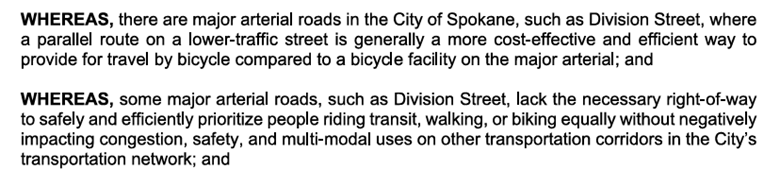
The Division Street project highlights the inherent difficulty in arriving at a set of complete street improvements that provide the optimal balance among modes. The cost side of the equation is usually straightforward enough, but estimating the benefits and quantifying the trade-offs can be very challenging.
To help WSDOT figure out how to comply with the complete streets legislation a Design Bulletin was issued that outlines factors to consider and identifies when deferral of complete streets improvements could be justified. The Design Bulletin does not specify a benefit/cost analysis but it does mention cost increases as a possible reason for deferring the complete streets improvements.

Note that the cost increase from complete streets improvements “may” warrant a decision to defer their inclusion if the cost increase is “greater than 50%”. That high threshold gives an indication of how much the legislature’s unfunded mandate for complete street improvements can increase project costs. In the 2027 session the legislature will again be looking for ways to expedite WSDOT projects and reduce permitting costs. They could start by looking at the costs and additional project development time imposed by the policies they have passed.
With all the emphasis WSDOT has placed on complete streets you might expect there would be plenty of data available to gauge the effectiveness of the policy. Curiously, WSDOT’s 2025 Complete Streets Implementation Report provides no such data. In the planning process the costs are estimated but it seems the benefits are simply assumed.
When WSDOT submits their budget request, which will no doubt include additional funding to cover the increased costs, the legislature should consider amending the statutory language to require before and after data collection so the effectiveness of the policy can be determined. Before throwing more money at the concept policy makers should know:
- Have the improvements produced an increase in cycling?
- Has transit ridership increased?
- Is there a reduction in collisions?
- Are the quantifiable benefits consistent with the assumptions used in the design process?
The aspirational policy goals are fine, but when weighing alternatives and making design decisions hard numbers are needed.