


An independent study of the economic impacts of Washington’s 2025 tax increases – the largest in state history – is projected to reduce economic growth by half a percent of state GDP and cut wages by about $3.7 billion in 2026. The impact grows to a reduction of 1.2 percent in state GDP and $8.5 billion in lost wages by 2029.
The macroeconomic analysis was completed by Infisum, a Washington state firm that has produced research for the Washington State Department of Natural Resources. The model based on those used by the World Bank, McKinsey, the U.S. government and others.
You can read the full study here.
The 2025 tax increases continued the state’s trend toward becoming one of the worst states in the nation for business and innovation. WPC’s Report Card for Washington’s Future highlights the serious decline over the past 15 years, with the state f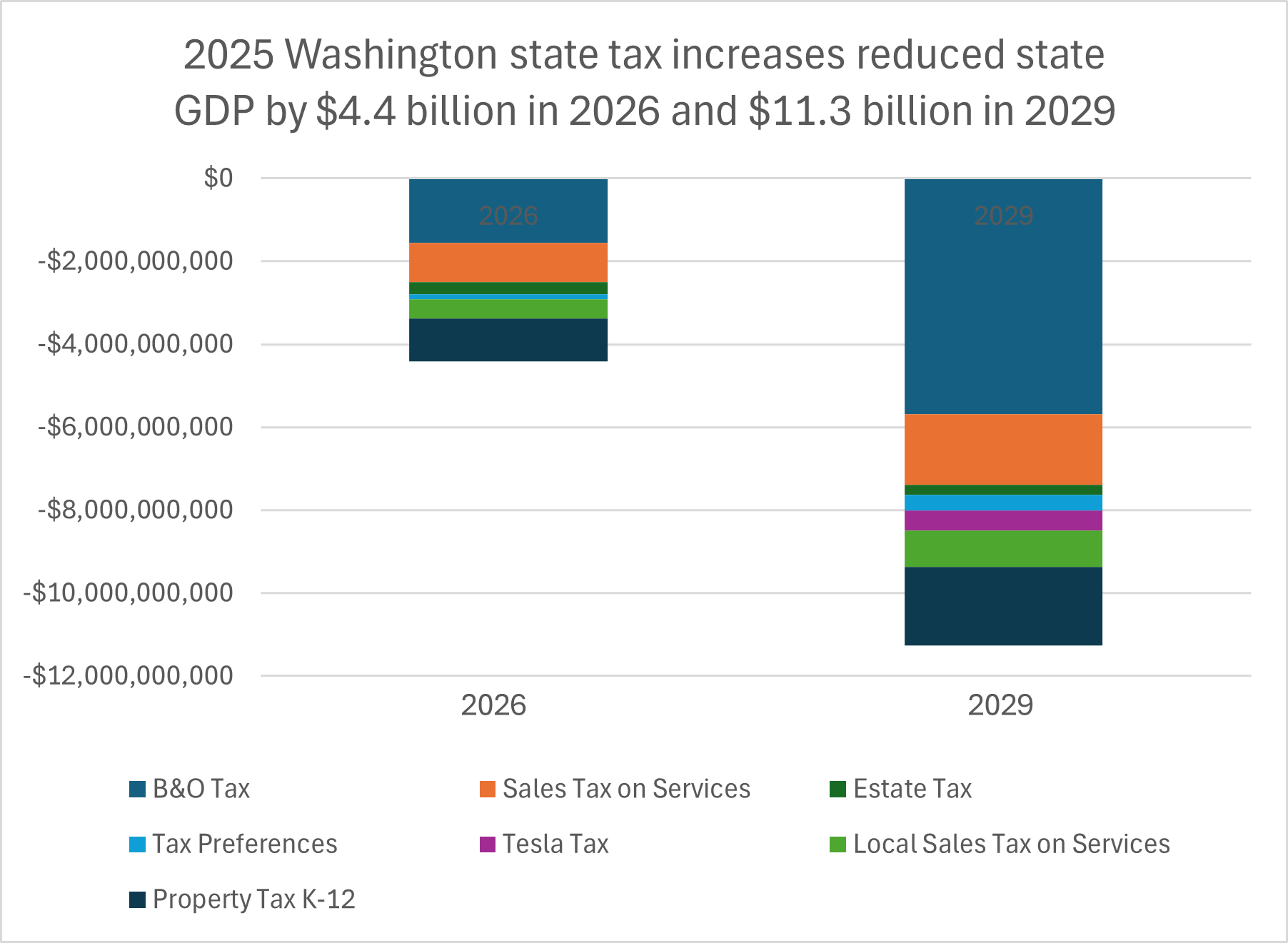 alling from the 6th best business tax climate in 2014 to 45th in the nation last year. Washington also has the highest rate of small business failure in the nation over the past five years, and one of the highest over the past decade.
The study found that the largest hit to economic growth comes from the increases in the Business and Occupation tax (B&O) and applying the state sales tax to services. The study also found that those two policies are projected to reduce wage for skilled and unskilled workers by more than $2 billion in 2026, growing to nearly $6 billion in 2029.
Recognizing the impact those taxes had, legislators have started to undo some of the most damaging elements of those increases. For example, the legislature is likely to repeal the increase in the death tax, which made Washington state the highest rate in the nation by a large margin. Additionally, the proposed income tax legislation would repeal some of the B&O tax increases from last year.
The proposed supplemental budget assumes billions more in new tax revenue in addition to last year’s tax increases, compounding the damage done to Washington’s innovation economy and small businesses.
The legislature has painted itself into a corner with consistently large increases in spending that require large tax increases to keep the budget in balance. Those tax increases make the state more expensive and depress economic growth that is necessary to create jobs and sustainable sources of revenue.
Until the legislature and governor develop a spending plan that is sustainable and responsible, Washington will continue on the spiral of increased budgets requiring increased taxes that do more damage to the business climate.