



Washington is one of the highest states when it comes to retail crime, yet Governor Bob Ferguson just vetoed $500,000 from the state budget that would have extended a proven program to fight organized retail crime (ORC). This decision is not just a budget footnote, it is the latest example of a deliberate policy choice to de-emphasize criminal enforcement for theft.
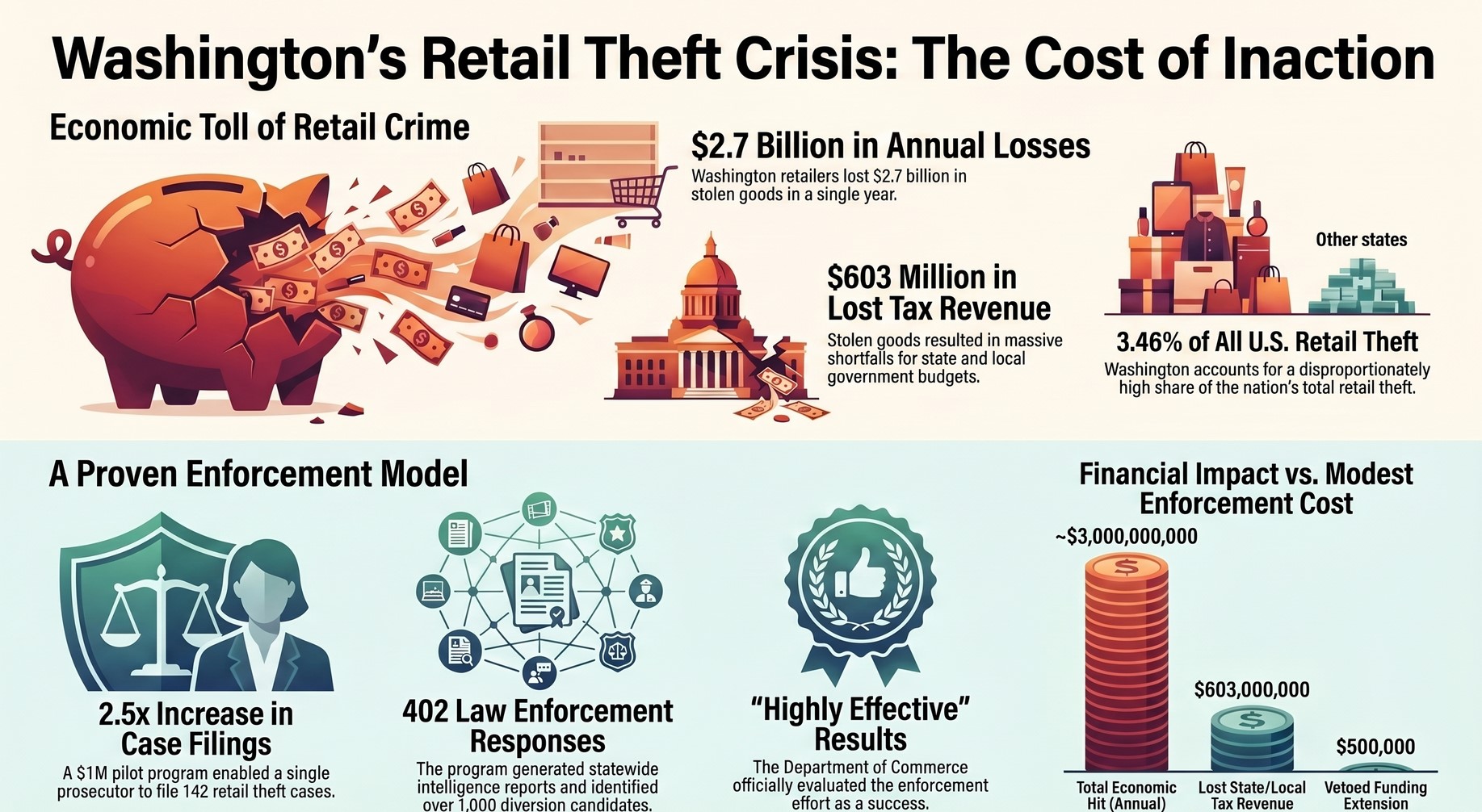
The numbers are staggering. According to the U.S. Chamber of Commerce, Washington retailers lost $2.7 billion in stolen goods in 2021 alone, generating $603 million in lost state and local tax revenue. That represents 3.46 percent of all U.S. retail theft. Forbes ranks Washington near the top nationally, with other industry groups estimating a nearly $3 billion annual economic hit that translates into higher prices for every consumer and lost jobs for workers.
A modest $1 million pilot program funded in 2024 showed what targeted enforcement can achieve. In King County, the extra prosecutor hired with those dollars filed 142 retail theft cases from January to June 2025, two-and-a-half times the four-year average. Statewide, the program generated 402 law enforcement responses, identified 1,194 potential diversion candidates, and produced thousands of ORC intelligence reports. A January 2025 Department of Commerce evaluation called the effort “highly effective.”
Yet Ferguson vetoed the $500,000 extension just two weeks after signing the supplemental budget. When pressed, the governor cited the need to “balance the budget.” Representative Mari Leavitt, a Democrat who championed the funding, was stunned: “This is a bipartisan concern across our state… It has nothing to do with politics but has everything to do with keeping our communities safe.”
The Washington Retail Association is equally blunt. Crystal Leatherman points out that repeat offenders are offered diversion programs with no enforcement mechanism: “They’re getting a free ride.” Seattle ranks among the top ten cities nationally for violence tied to retail theft, according to the National Retail Federation’s 2025 report. Employees and customers are threatened daily while organized crews treat stores as self-service warehouses.
The veto is part of a larger pattern. For years, Washington policymakers have softened penalties for theft, expanded diversion, and under-resourced prosecution. The predictable result is a revolving door that emboldens professional thieves while honest businesses and taxpayers foot the bill.
$500,000 is a tiny fraction of the state budget, yet its impact would have been outsized. Law enforcement, prosecutors, and retailers across King, Snohomish, and Spokane counties were ready to build on proven results. Retail theft is not a victimless crime. It drives up prices, reduces tax revenue, threatens workers, and erodes quality of life. Until Washington restores serious criminal enforcement, starting with funding what works, businesses will continue to close, consumers will pay more, and communities will feel less safe.
Lawmakers should override the veto in the next session and send a clear message - theft will be prosecuted, not tolerated.