
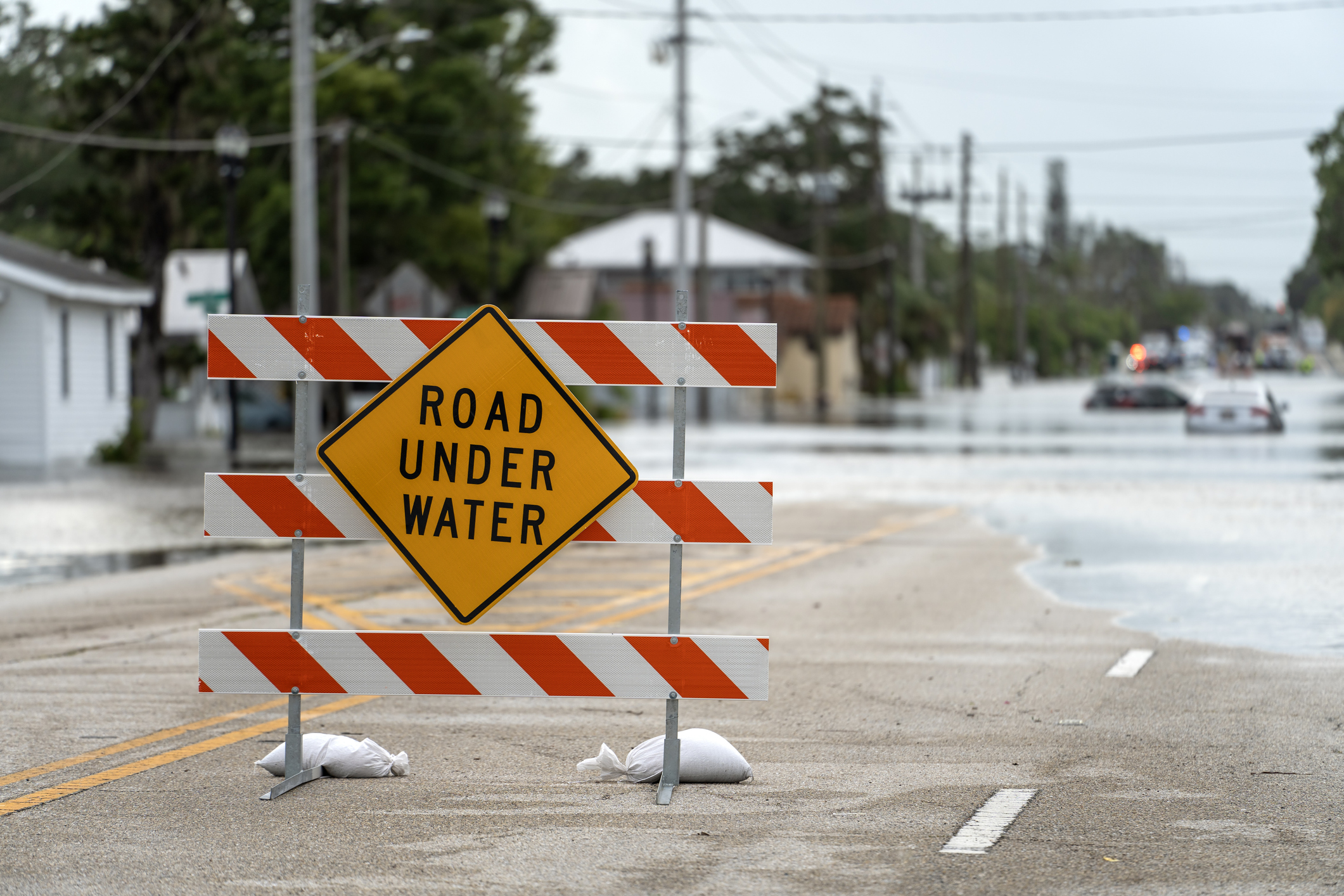


As flooding hit Western Washington, some argued that the record flooding was evidence of climate change and the need for more state spending to prevent similar events in the future. Whether that is true or not, the state’s recent report on the first two years of climate spending totaling more than $1.5 billion shows that contrary to the rhetoric, legislators have not prioritized mitigating the harm from future flooding.
For example, during the first two years of Washington’s CO2 tax, more of that funding was spent on “bicycle education” for elementary and middle school students than to prevent flooding across the entire state.
Rather than continuing the current approach to climate budgeting that emphasizes political agendas, the legislature and governor should adopt WPC’s longtime recommendation to prioritize based on environmental outcomes.
In its writeup of the floods last Thursday, The Seattle Times’ Bullitt Foundation-funded Climate Lab, warned that “climate change is going to make things worse, threatening communities along rivers and in floodplains.”
Indeed, reducing the risk of floods is one of the areas where money from the state’s multi-billion dollar CO2 tax is being spent and flooding is specifically mentioned in the legislation adopting the CO2 tax, known as the Climate Commitment Act (CCA). Since it took effect in 2023, the CCA has collected more than $4 billion in taxes, and more than $3 billion was appropriated in the first two years of the program.
So, how much of that money has been spent to reduce the impact of flooding across the state?
According to the state’s recently released list of projects, just one-half of one percent of the $1.5 billion already spent on climate projects went to address the risk from flooding. Instead of going to projects to reduce the impact of floods, much of the $7.1 million spent on flooding projects went to staffing and planning.
For example, the largest single expenditure on flooding listed in the state’s spending list is $1.5 million to the Whatcom County Public Works Department for their Floodplain Integrated Planning process. Another $406,797 went to training “young adults to implement ecological restoration and flood prevention projects in the south Puget Sound region.” And another $900,000 went to “staff costs to administer the Transboundary Flooding grant program.”
Not all funding went to staff or planning. Just over $350,000 went to improve a flood control channel in Walla Walla and nearly $150,000 was spent to improve flood processes on the Quillayute River. Flood control projects can take many years to complete, so some projects funded by CCA money now will be completed in the future. About $17.6 million of CCA funding was budgeted to be fund the Floodplains by Design program. Another $25 million of CCA funding will be spent on riparian function for salmon, some of which will reduce the impact of floods.
Even with those future expenditures, the amount of CCA money dedicated to reducing the impacts of flooding is relatively small. During the first two years of the CCA, more was spent on each of the following programs (among others) than addressing flood risk:
- Bicycle education for elementary and middle school students
- Personnel related costs to implement the Climate Pollution Reduction Program for the Department of Ecology
- Conversion to hybrid electric propulsion for the Jumbo Mark II vessels
- Matching Funds for US Dept of Energy Hydrogen Hub (which has since been canceled by Congress)
- HVAC improvements at the Chief Leschi School
These expenditures are notable for a few additional reasons. Some of the funding for the bicycle program went to the Cascade Bicycle Club, a progressive special interest that engages in public advocacy. The conversion of ferries from diesel to electric is proving to be more expensive and take more time than projected and yields very little CO2-reduction for the money. And as noted above, the funding for the hydrogen hub has been cut by Congress, so the money may end up yielding little, if anything.
The Washington State Legislature should change how it prioritizes spending the billions of dollars collected by the CO2 tax. We have consistently recommended a concept introduced by Jay Inslee in his first climate legislation in 2013, ESSB 5802, which said climate expenditures “must be prioritized to ensure the greatest amount of environmental benefit for each dollar spent and based on measures of environmental effectiveness.” That is not being done. The result is that even as political leaders point to flooding and other weather events as evidence of climate change and the need for the CCA, there is little spent to address those risks.