
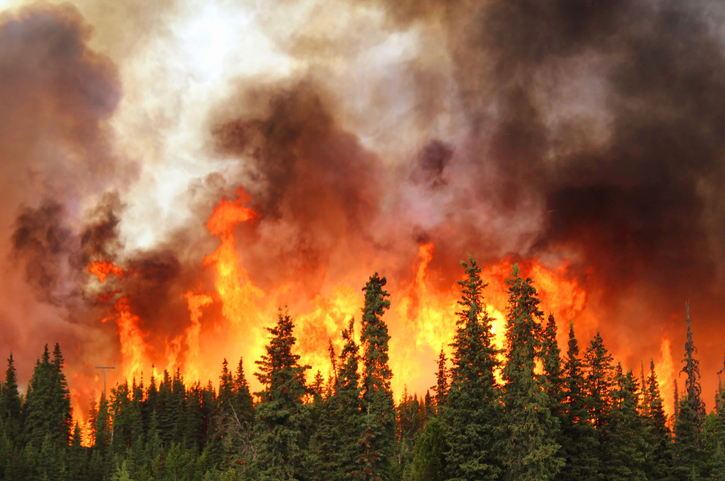
Washington state is once again dealing with smoke from massive wildfires and some of the largest fires are in wilderness areas on federal lands. Despite the risk of catastrophic wildfire from unhealthy and bug-killed forests, the Forest Service has done little to thin or harvest these areas because a variety of regulations and budget constraints make it difficult to do the work necessary to reduce the risk of those fires.
That’s one reason the U.S. Forest Service is considering rescinding the roadless rule that prevents roads from being built in many areas of federal forests in Washington state and other states across the West.
Predictably, environmental groups like the Sierra Club have already made apocalyptic claims about what removing the roadless rule would mean for wilderness areas. Congresswoman Kim Schrier claimed that removing the roadless rule would increase human-caused wildfires.
This is ironic because there is currently a fire in a roadless area in her district as I speak. We leave our windows open during the summer and for weeks we have been smelling the smoke from that fire.
North of me, there is a 136,000 acre fire – the Little Giant Fire – is impacting not one, but two roadless areas. The fuel in that area is described as “heavy dead and down fuels.” The fire risk in some of these areas is a key reason that the roadless rule is being removed. The announcement from the USDA explains that, “there is a need to increase local management flexibility and, where necessary, allow for active management to respond to changing and localized conditions, such as increasing wildfire risk, the spread of insect and disease infestations, and the need for community protection in the wildland-urban interface.”
The forests in some of these areas aren’t pristine, healthy forest and wildlife habitat. They are unhealthy, dead timber waiting for lightning or a nearby fire to rip through and destroy the forest.
When I was a public information officer on a forest fire in the North Cascades, I remember the fire ripping through an area that had been protected from harvest because there was a spotted owl in the area. That forest and the owl didn’t survive the fire.
The roadless rule isn’t being removed because the timber in these areas is high quality and will generate revenue. To the contrary, it will cost money to build the roads and it will probably even cost money to harvest the dead timber because it is low quality and the value of the timber will be less than the cost of harvesting, transporting and milling the timber.
This is why, contrary to the hyperbolic rhetoric we hear from environmental activists and some members of Congress, removing the roadless rule is unlikely to increase timber harvests in any meaningful way. Congress would have to pay to have timber removed. The Forest Service already has a severe backlog of unhealthy forests that need to be harvested to reduce the risk of catastrophic wildfire. Roadless areas that would be harvested are in areas where the need to reduce the risk of catastrophic wildfire is extreme.
One talking point I’ve already seen is that few fires start in roadless areas. Governor Ferguson tweeted that “Scientific studies show that most wildfires begin near areas with road access rather than in roadless areas.” That is true but meaningless. It is like saying gasoline isn’t a fire risk because the fire started on the match, not the gasoline.
Most fires are human-caused, but many are small and put out quickly because firefighters can reach them. Fires that reach unhealthy forests – whether started by people or lightning – can take off and turn into massive fires because of the fuel in those areas in the same way that throwing gasoline on an existing fire makes it much worse.
The simple truth is that removing the roadless rule won’t have much impact on forests or wilderness areas. Congress simply doesn’t have the money to harvest in these areas in any meaningful way and the Forest Service has many other forests that are more important and cost less.
But as this fire season, and the wildfire smoke at my house can attest, there are roadless areas that would benefit from harvesting dead and dry timber and replanting to create a resilient forest that is not only less likely to burn in a catastrophic wildfire but can provide better habitat for wildlife.
Forests in roadless areas have burned, are burning and will burn in the future. This change will only impact a small fraction of those areas, but the flexibility is welcome and useful.
The public has a month to comment on the proposal and we will be sending a note encouraging the Forest Service to rescind the roadless rule to give federal foresters the opportunity to treat parts of the federal forest – like those near my home – that are in need of treatment. Otherwise, we are likely to see many more smokey summers like this one in the future.