

In the next few days, voters living in parts of Pierce, King and Snohomish counties will decide whether or not to pass Sound Transit’s $54 billion-dollar tax proposal, known as Sound Transit 3 (ST3). Sound Transit is an enormous, wealthy public transit bureaucracy run by a small unelected board. Their ballot measure would primarily extend existing light rail lines to create a 116-mile rail network by 2040.
The campaign serving Sound Transit’s interests, Mass Transit Now, has spent millions to persuade voters that giving the agency another $54 billion in public funds will help Sound Transit alleviate their traffic congestion woes, create jobs, spur the local economy, create affordable housing, fund education, and even save the planet. Like any established government entity, Sound Transit officials insist they care and know what is best for us. With that reasoning, they offer us ST3.
As most residents already know, Sound Transit officials want to receive a massive and indefinite tax increase from the public, a financial gain that for any group of officials would represent a once-in-a-lifetime windfall.
Yet as the fog of taxpayer-funded, ribbon-cutting parties and media propaganda clears, it becomes evident that Sound Transit is only offering more empty promises. In fact, public officials want to cancel their promised rollback of ST1 and ST2 taxes and allocate them to ST3, increase the cost of yearly car tabs, push the sales tax to over 10%, and begin the practice of diverting property tax revenue from schools to transit.
They present overpriced light capacity rail trains as the sole way out of traffic congestion. They say it’s about giving people choices, and that congestion can’t be fixed. When presented with public objections, they proclaim we have to think about the kids – the future generations that might ride on ST3 extensions in 25 years.
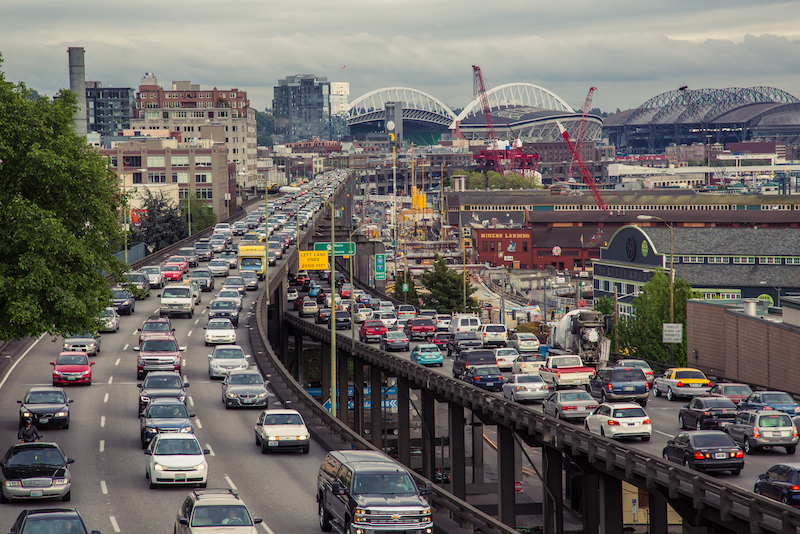
In reality, Sound Transit’s empire does not serve kids or relieve congestion or respect people’s freedom of choice. Sound Transit officials hope that as traffic congestion gets worse and drivers become increasingly miserable, people will have no choice but to abandon private vehicles and use public transit.
Yet the latest data show that despite the agency’s best efforts to eliminate individual mobility choices and push commuters into Sound Transit’s choice of travel, people continue to purchase cars and pay for parking. Driving is popular, and is the preferred choice of 80% of people who travel every day.
The people who most need the flexibility that cars provide are families and those with low incomes. These are the people Sound Transit’s regressive taxes hurt the most. It is working parents and their kids who will continue to sit in traffic gridlock while Sound Transit collects more from them in regressive car tab, sales and property taxes.
If ST3 passes, the working mother in Bothell who has to take her child to school or day care, get to work, run to the grocery store, and pick her child up later will continue to sit in mind-numbing traffic. Except now, she will be paying Sound Transit an additional $300-$400 dollars a year on top of what she already pays to Sound Transit for projects that will not alleviate her commute or improve her quality of life.
The working poor family will not be helped either. Sound Transit’s regressive taxation would take even more money out of already thin family budgets. Those who live and work in low-income communities, who have multiple jobs, who work off-hour shifts that many low-wage jobs require, or who must live on a fixed income will feel the financial burden of ST3 the most. One recent economic study found that among the working poor, those with cars are twice as likely to find a job and four times as likely to keep it. Many low-paid workers in Seattle (food service employees, janitors, mechanics), for example, cannot afford to work and live in the city and must rely on a car to commute. Yet Sound Transit officials continue to ignore drivers and are increasingly insensitive to the real needs of commuters who struggle to find and keep jobs.
Despite Sound Transit’s rosy promises, very few new riders will shift to transit if ST3’s $54 billion is collected and spent. According to Sound Transit’s data, about 94 percent of the one million expected new residents will not use public transit. Given the realities of middle and low-income working families, it is easy to see why.
The primary beneficiary of Sound Transit’s light rail plan is Sound Transit. If it passes, ST3’s new layer of regressive taxes will prove harmful to hardworking people and families and yes, kids, all over the region.