

Governor Ferguson's Proposed 2026 Supplemental Budget
1. Recommends a 9.9% Income Tax
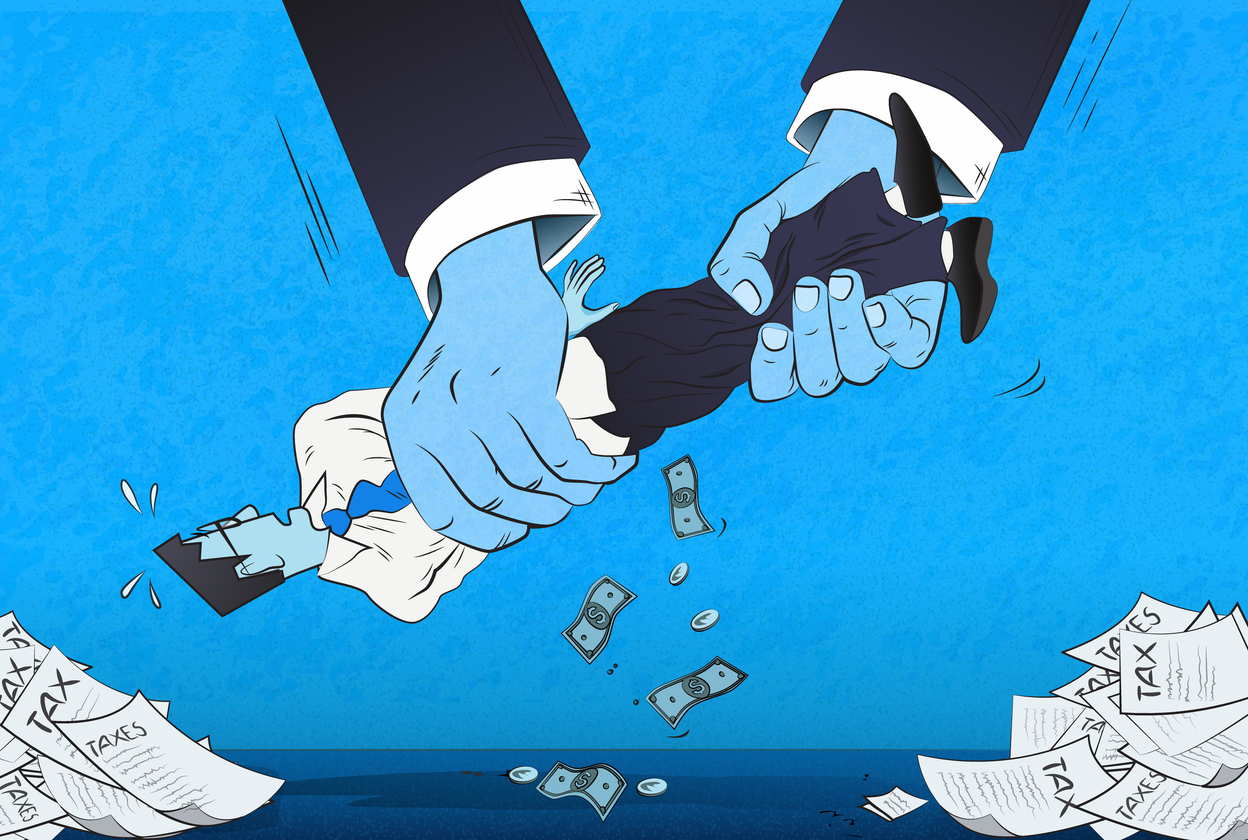
The governor's proposed 9.9% tax on income over $1 million (revenues starting 2029) is the most contentious part of the plan.
In March 2024, the Washington State Legislature adopted Initiative 2111 to prohibit state and local personal income taxes. The measure passed with support from all Republicans and a majority of Democrats in both chambers. A 9.9% tax on personal earnings conflicts with this law. The administration hasn't explained how this complies with I-2111's prohibition.
This would be Washington's 12th income tax attempt since 1932—voters rejected it 11 times. By asking approval for a millionaire-only tax, the administration establishes a graduated framework that would only need legislative modification afterward, not further voter approval.
We strongly oppose an income tax but appreciate Gov. Ferguson's promise to let voters decide. He proposes a constitutional amendment limiting it to income over $1 million, yet his proposal ignores existing constitutional limits. If adopted, this income tax will certainly expand in the future.
2. Washington has a $2.3 billion shortfall to solve this year
The administration points to external factors like federal policy changes, but the $2.3 billion gap reflects state spending growth outpacing revenue. The shortfall comes from a "maintenance level" cost increase of $1.6 billion combined with $700 million in new policy spending choices.
3. $797 million savings due to cuts for public agencies
Cabinet-level agencies must cut operating budgets by 6%, and public four-year universities face a 3% cut in state funding. The budget exempts K-12 education, community and technical colleges, the State Patrol, and the Department of Corrections from cuts.
4. $1 billion withdrawal from the rainy day fund
The governor's budget pulls about $1 billion from the state's Budget Stabilization Account (rainy day fund.) Of that, only $165 million is due to federal "cost shifts to Washington's budget." With the agency spending cuts included, most of the budget shortfall comes from decisions in Washington state, not Washington D.C.
5. Business tax hikes
The proposal raises revenue by removing the sales tax exemption for data center server replacements ($63 million) and the preferential B&O rate for prescription drug wholesalers ($26 million). Affected businesses will see a higher tax liability.
6. Uses CCA funds to pay for the Working Families Tax Credit
The budget shifts $569 million in Climate Commitment Act (CCA) revenue to fund the Working Families Tax Credit. The CCA's original allocation was meant for carbon reduction and infrastructure projects but will now go toward direct cash assistance for lower-income households.
7. $3.2 billion for new ferries and infrastructure
The proposed capital budget puts $1.1 billion toward three new hybrid-electric ferries and $2.1 billion toward road and bridge maintenance. Infrastructure investments are financed through bonding instead of direct appropriation from current revenue. The State Treasurer has expressed concern about adding to Washington’s debt load.
SPEAK UP! Go to our Take Action page and tell the governor we want no new taxes. This tool enables you to message your two state representatives, your state senator, and the governor, all in one click!.