
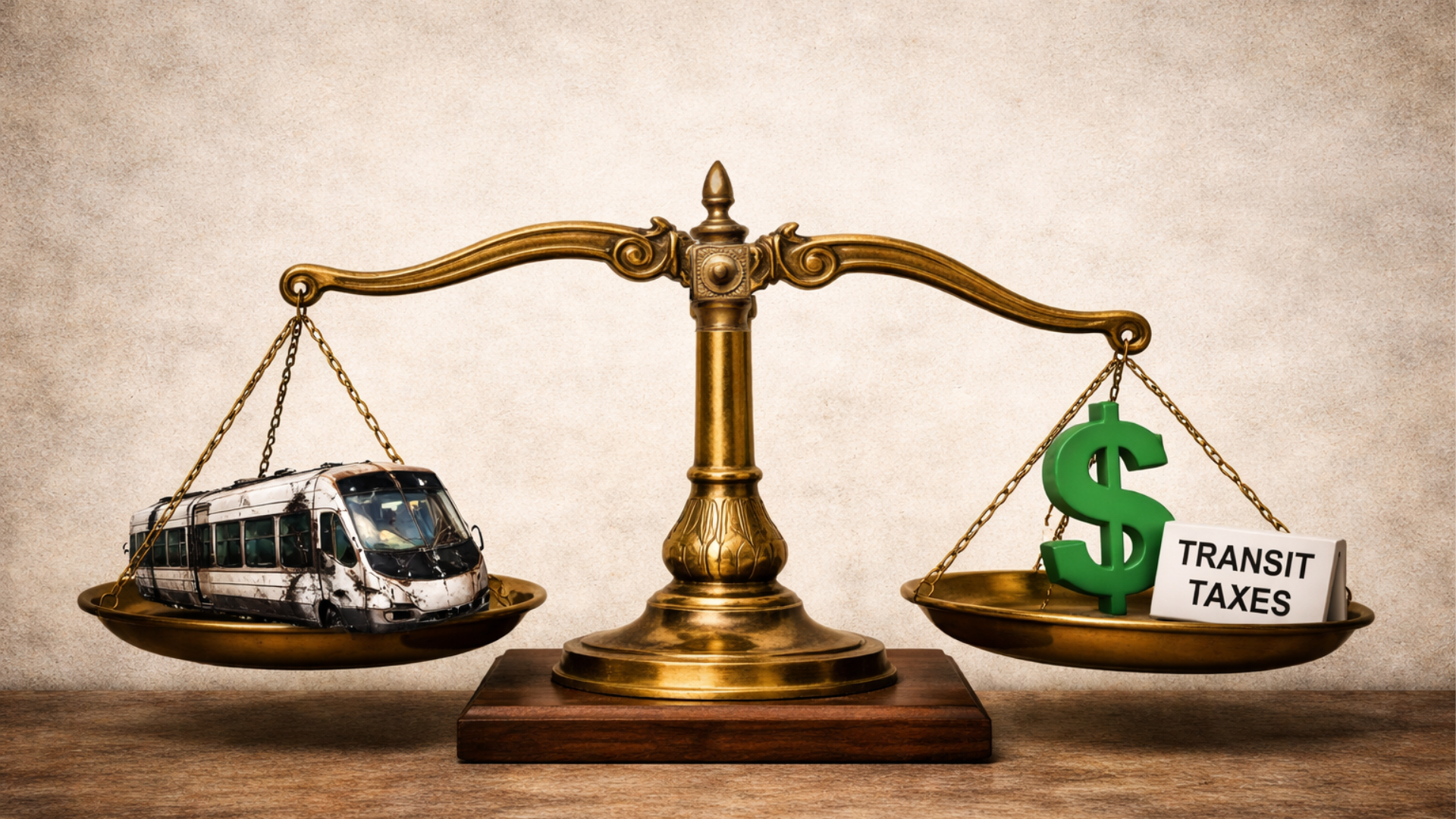


In his Transportation Issues Daily blog, local transportation blogger Larry Ehl expands his coverage of the “Occupy Transit” protest planned in Seattle for Wednesday. Larry has a link to the full press release from the national Amalgamated Transit Union, who is sponsoring the protest. According to their press release, transit union executives are protesting transit service cuts, layoffs and fare increases.
“Public transportation is a human right and critical to our nation’s economic recovery,” said ATU International President Larry Hanley. “We need to be clear that the mass transit crisis was caused in no small part by the diversion of billions of tax dollars to war and the corporations that benefit from war. And this has lead to service cuts, transit worker layoffs, and higher passenger fares which are really just another kind of tax, levied on those who can least afford it.”
I covered this aspect in a previous post, but it is worth repeating. Hanley is flat wrong and overdramatic by claiming public transportation is a right. Public transportation is not a right; no more so than driving a car or flying in an airplane is a right. The freedom of citizens to move around and go where they want is a right, but the method by which they do it is not. Union executives are confusing a right with a benefit. A right is something all persons have, like freedom to travel, and it is protected by government; a benefit is a good or service people receive, and might be provided by government, like a bus ride.
Secondly, mass transit in not in a funding crisis, at least not in Washington. In 2010, the 31 transit agencies collected more than $2 billion in total revenues, which is almost twice as much as the entire state collects in gas tax revenue. This is remarkable, considering public transit only serves about 2.4% of all daily person-trip demand. And the cost of recent conflicts in Iraq and Afghanistan really has no connection to transit funding. Most transit agencies are subsidized through local taxes. In Washington for example, transit’s primary funding source is sales taxes imposed at the local level. In fact, among the 31 transit agencies in Washington state, only 7% of total revenues was federal operating dollars, and most of that was probably paid by drivers in the form of federal gas taxes.
Finally, transit union officials protest fare increases by labeling them “just another kind of tax.” Actually, transit fares are not a tax, they are a toll and they operate under the concept of a user-fee system. In other words, passenger fares directly fund transit, not other, unrelated government services. This makes passenger fares a user fee or a toll, not a tax.
Haney concludes the press release with this gem:
“It’s time for the 99% to demand that all Americans pay their fare share so that the U.S. can maintain the mobility which has been one of the hallmarks of its remarkable success, and changes must be made so that everyone has an equal opportunity to take part in that success.”
Hanley’s play on the phrase “that Americans pay their ‘fare’ share” illustrates someone who is just out of touch and who thinks taxpayers should subsidize transit even more than they already do. In Washington and with most transit agencies across the country, transit passengers only pay about 20% of annual operating expenses, while taxpayers subsidize the remaining 80%, plus 100% of capital costs.
Challenging King County Metro and Sound Transit with these arguments just makes the local transit unions look silly.