

Judges elected this November will make some of the most consequential decisions about the future of Washington state. Supreme Court justices will decide if the constitutional protections relating to income taxes and other issues remain intact. But choosing a candidate can be difficult.
We asked former Supreme Court Justice Phil Talmadge to write a short guide to studying the judges on the ballot, how to ask key questions and make a choice not just for candidates for the top court but at all levels. -- WPC VP for Research Todd Myers
As a voter, you’re entitled to ask questions and get answers from judicial candidates
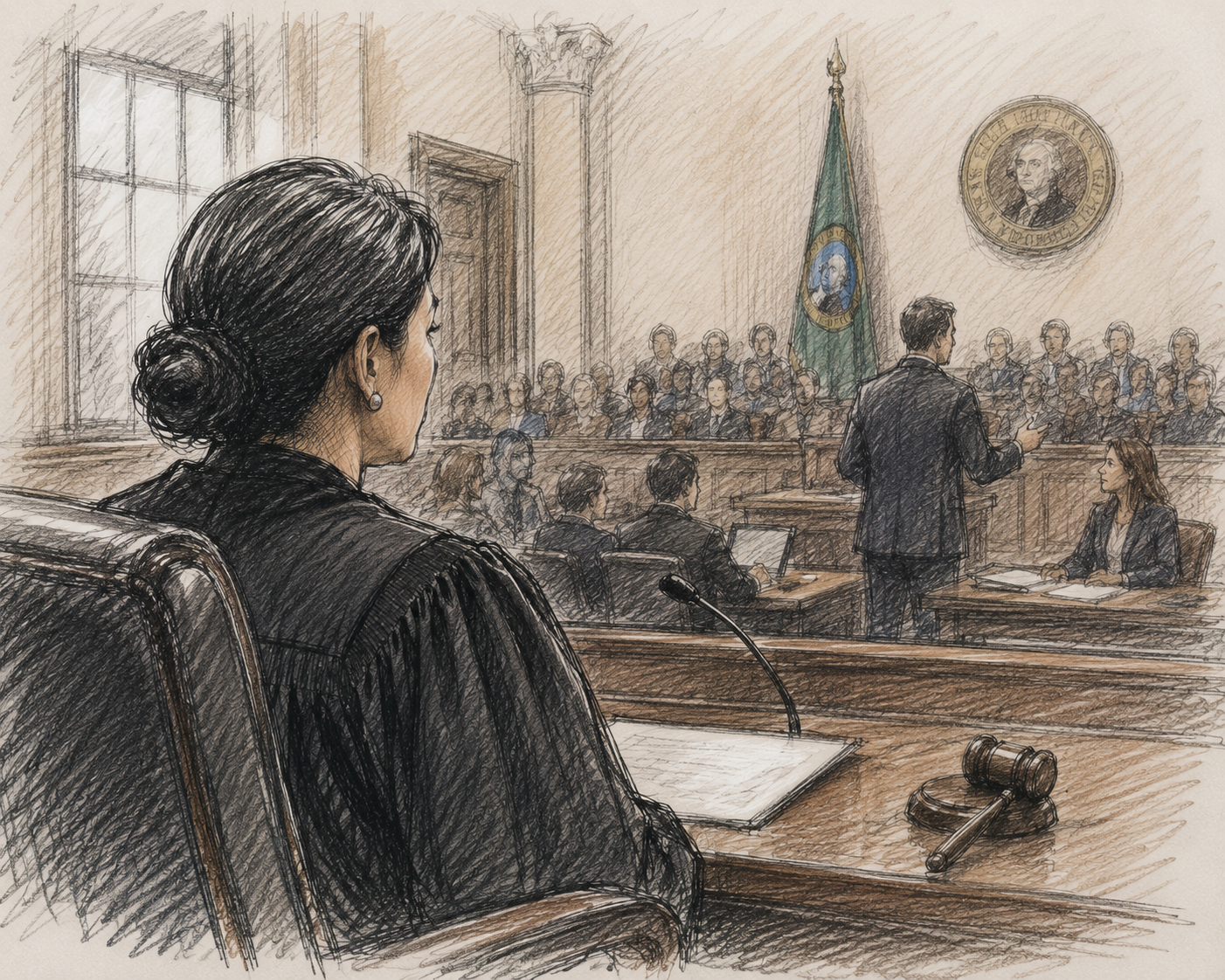
By Phil TalmadgeFormer Washington State Supreme Court JusticeThe Washington Supreme Court stands at the apex of our State’s judicial branch of government. Its nine members regulate the practice of law in Washington. It establishes the rules governing procedures for all levels of Washington courts. The justices make decisions in cases that touch upon virtually all aspects of our lives – decisions in criminal cases, family law controversies, and civil liability in commercial and personal injuries cases, just to name a few. It’s hard to think of matters that do not fall within the authority of the justices.
The justices are elected statewide for six years. But despite the Court’s crucial role in our government and our lives, elections for positions on the Court have historically created only modest public interest compared to high profile partisan races like those for Governor or United States Senator.
This year, however, Supreme Court elections have a much higher significance in the public mind prompted by the possibility that the Court will soon tackle big policy issues like the constitutionality of a graduated state net income tax.
The question often asked of me as a former Justice/State Senator and practicing attorney is: how do I go about deciding on Supreme Court candidates besides asking my lawyer friends?
A good starting point is, of course, the State Voter Pamphlet. It is an excellent introduction to the candidates. It can be supplemented by then exploring the websites each campaign will invariably maintain. A voter should explore the candidates’ listed endorsements, and look for practical, applicable experience. Have they been practicing law long enough, with enough variable experience, to bring broad expertise to the bench? Do they have judicial experience, either at the trial or appellate level?
But it’s possible to drill down a bit deeper to obtain the candidates’ views on public issues. Yes, you can do that. The U.S. Supreme Court ruled in Republican Party of Minnesota v. White that the First Amendment applies to judges, and our own Supreme Court declined to discipline a justice who appeared at a pro-life rally at the State Capitol. Judicial candidates can tell you their views on public policy issues generally. You can ask them online, on social media, at a candidate forum, or in your organization’s candidate endorsement questionnaire.
Some judicial candidates may try to dodge taking a stand on tough public issues, but they are entitled to give you their views. What judicial candidates can’t do under judicial ethics rules is to promise you how they will rule in specific cases. So, for example, in the income tax setting, you might ask a candidate: Do you believe that income is property in our State? But you could not ask: Will you promise to uphold the income tax law the Legislature passed if it comes to the Supreme Court?
Judicial candidates are elected, after all. Elections involve not only a competition of candidates but a competition of ideas. As a voter, you’re entitled to ask questions and get answers from judicial candidates so that you can intelligently exercise your precious right to vote.