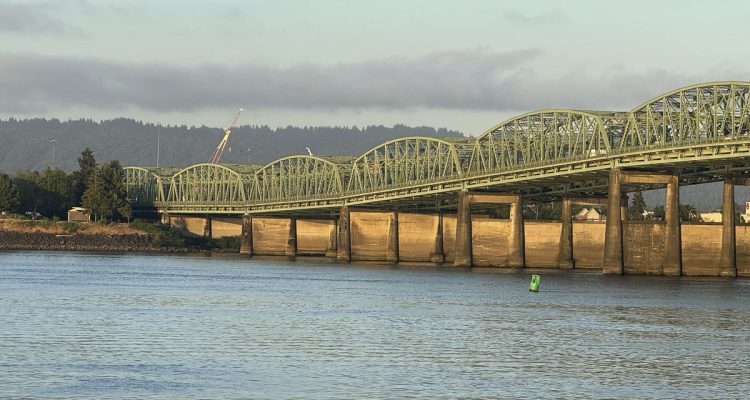


Documents obtained by Nigel Jaquiss, a reporter for Willamette Week, reveal the “probable cost” of the I-5 Columbia River Bridge replacement project has more than doubled to $13.6 billion. As recently as 2022 the estimated cost was about $6 billion.
The $13.6 billion estimate is being refined through WSDOT’s Cost Estimate Validation Process (commonly known as CEVP). That is a worthwhile exercise and should produce more reliable cost numbers, though nobody should expect them to be substantially lower, indeed, taking risk into account may yield a higher probable cost range. Legislators should also keep in mind that CEVP is limited to the project as currently defined. It will not tell policy makers about the alternatives or how much Federal funding can reasonably be assumed. Those are likely to become important questions given the budget-busting cost increase.
The multi-billion dollar increase comes at an awkward time (though some might say just in time). The 2026 session of the Washington legislature begins this week, and the supplemental budget will need to address various transportation funding needs. These include a half billion dollar shortfall in funding for replacement of the Hood River Bridge, funding to replace the SR 165 bridge over the Carbon River (which was abruptly closed in 2025 due to structural deterioration), billions of dollars in unfunded preservation and maintenance needs on highways all over the state, and billions more for renewing the ferry fleet. Even with the gas tax and license fee increases passed in 2025 there isn’t enough revenue to cover everything on the legislature’s wish list. The new cost estimate for the I-5 bridge adds billions more to the legislature’s budget dilemma.
Now that the magnitude of the “probable cost” is out in the open it can’t be ignored. What options does the legislature have? Here’s a short list:
- Shift funding from other state highway projects – There is no surplus in other project budgets to take, and it would be both costly and politically challenging to pull the rug out from other highway projects that are already underway or set to begin construction.
- Shift funding from other programs – In recent sessions the legislature has provided hundreds of millions of dollars in electric vehicle incentives, transit subsidies, e-bike subsides, and other peripheral programs paid for out of the transportation budget. If replacing the I-5 Columbia River bridge is a top priority it may be time to reconsider how state transportation revenues are allocated.
- Increase taxes and fees – More tax increases might not go over well coming so soon after the 2025 increase in the gas tax, weight fees, tire disposal fee, etc. The timing is especially problematic in a legislative session where affordability is an issue and an income tax proposal is on the agenda.
- Allocate carbon-emissions revenue – Under the Climate Commitment Act the state rakes in well over a billion dollars per year from producers of fuels. Those costs are passed on to consumers in the form of higher gas and diesel prices (you may have noticed). Despite that logical nexus with transportation, when the legislature passed the Climate Commitment Act they chose to prohibit use of the funds for highway purposes, so legislative action would be needed to make carbon emissions revenue available. The I-5 Bridge project includes a light rail extension which somebody might suggest would be an appropriate for use of those funds, but light rail’s big carbon footprint and its very meager ridership make it an ineffective way to reduce carbon emissions.
- Increase tolls – The project financing plan already assumes the new bridge will be tolled, but the budget gap is so large that tripling the toll rate still wouldn’t be enough to balance the books. Abruptly making a major change in the tolling assumption would also necessitate revising the traffic forecasts and environmental analysis, further pushing out the date at which the project could advance.
- Delete the light rail extension - The light rail elements of the plan have a price tag of about $2.1 billion, so removing them from the plan would certainly help lower the cost. Cost isn’t the only reason this should be considered. Initially the light rail extension was forecast to carry over 25,000 riders per day, but last year the number was lowered to just 5,000 per day, which could easily be accommodated with express bus service at a fraction of the cost. To put the ridership number in perspective, roughly 180,000 people per day use the existing I-5 bridge. Therefore the expected transit ridership would constitute less than three percent of the total despite light rail being about 15% of the project cost. Deletion of the light rail extension would also have the benefit of simplifying the project, speeding construction, and reducing schedule and cost risks.
- Go back to the drawing board – Many observers regard the project in its current form as unaffordable and not in the best interests of SW Washington residents. Not only has the cost ballooned but the project does little to address mobility problems in Clark County or through downtown Portland. It would be politically awkward to admit the plan has turned into an unworkable mess, but it isn't obvious how the project can move to construction without a credible financing plan.
This is a lot to consider, and in the short 2026 session it may be more than the legislature has time to digest. However, it seems inevitable the legislature will be asked to provide additional funding. Before taking action on that request the legislature ought to ask a few pertinent questions, in particular:
- Since 2010 more than $400 million has been spent on studies, plans and inter-agency coordination for replacement of the I-5 Columbia River Bridge, but these efforts have not produced an affordable and cost-effective plan. Where did the process go wrong?
- Delays in completing the environmental process, rising costs, and low transit ridership cast doubt on the ability to secure Federal grants to help finance the project. How will the project be completed if Federal grants are not forthcoming?
- Documents show the revised cost estimate was prepared in August, but that information wasn’t made available to legislators or the public until after the Oregon legislature had passed a bill that increased transportation taxes. More than a quarter million Oregon voters then signed a petition to place a referendum repealing the tax increases on the ballot in 2026. If Oregon is unable to guarantee funding for their half of the project (including cost increases), should Washington proceed, wait, or terminate work on the project?
- Three important Columbia River bridges are a hundred years old (or nearly so) and in need of replacement (SR 35 Hood River Bridge, I-5 Columbia River Bridge, and the SR 433 Lewis and Clark Bridge in Longview). Why hasn’t WSDOT come up with a workable plan for replacing these vital pieces of the state’s transportation infrastructure when their deteriorating condition has been known for years?
- Washington law sets forth transportation policy goals and emphasizes cost-effectiveness in developing plans. Why hasn’t this extensive statutory guidance along with increases in state transportation revenue produced better outcomes?
In the state’s early days crossing the mighty Columbia River was a challenge. Today the legislature needs to ensure the WSDOT planning process hasn’t become the obstacle to finding practical solutions.