


An old idea for a statewide tax on sweetened beverages is back on repeat. House Bill 2734 was filed Feb. 6, 2026, and it’s sitting in the House Finance Committee. It’s late in the season for filing, but very much alive. Committee placement means it could still move if leadership wants it to.
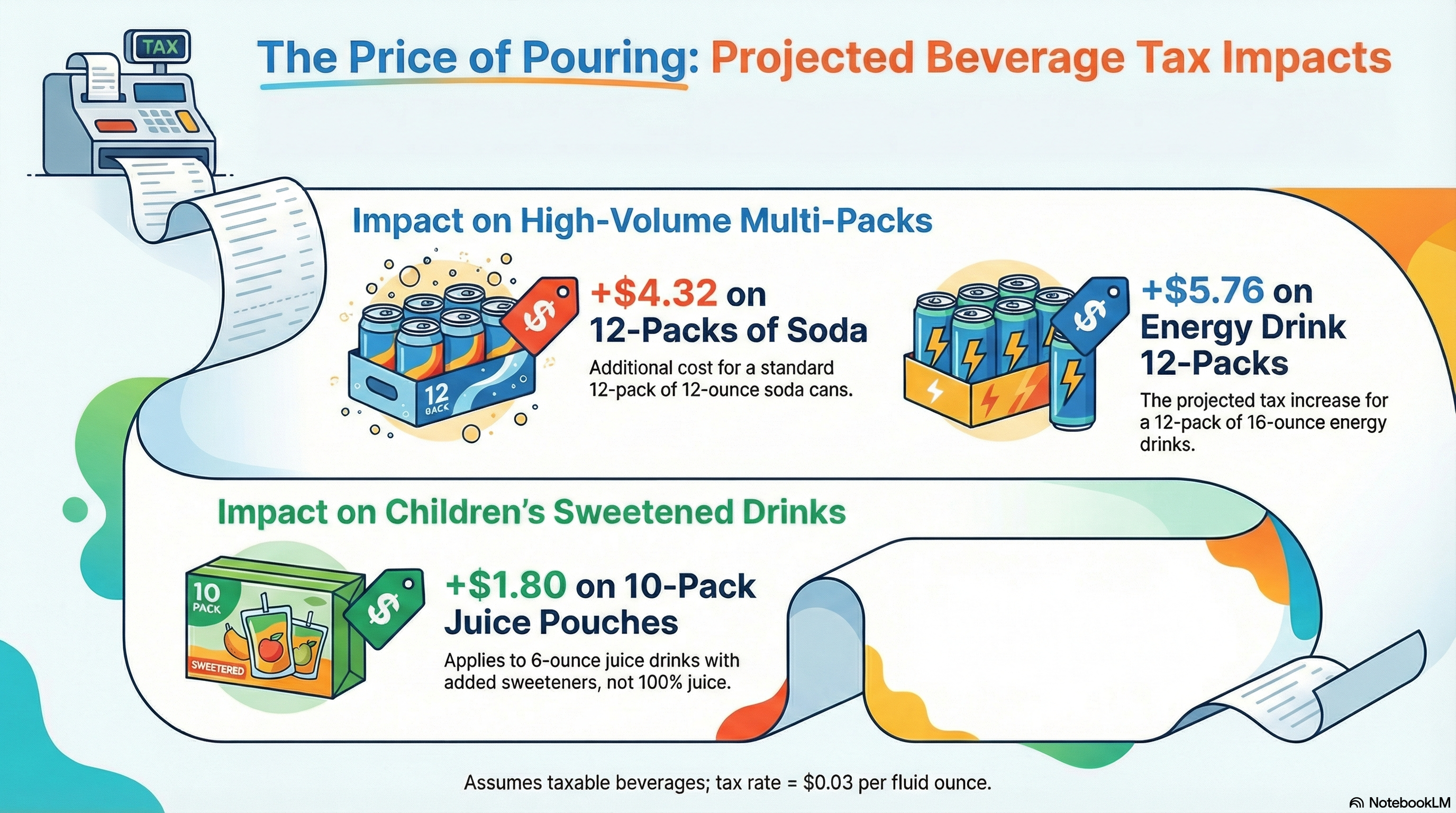
The proposal for another regressive tax would add three cents to every fluid ounce of “sugar-sweetened" beverages, starting Jan. 1, 2028. That level would be highly noticeable at checkout, adding dollars — not pennies — to many everyday drinks at checkout (about $4.32 on a 12-pack of 12-oz soda, and about $1.80 on a 10-pack of 6-oz kids’ juice pouches).
Supporters say the tax is about health and equity, but the bill’s structure looks like a revenue mechanism first. It directs the new tax revenue into a “Hunger Free Washington” account to fund and administer food assistance and nutrition programs it says will suffer because of federal reforms. And in one of the bill’s stranger twists, it also prohibits state agencies from seeking a USDA waiver to exclude the sugary beverages it wants to tax from the definition of SNAP-eligible foods — meaning the state would tax these products while barring itself from even asking permission to restrict their purchase under food stamps. This is about health? No.
If the primary goal were better health outcomes, the bill would be built around measurable reductions in sugar intake and clear guardrails for program design. Instead, the architecture reads like a revenue mechanism with a public-health press release attached.
The bill repeatedly argues that sweetened beverages disproportionately harm low-income communities and communities of color. That means this tax burden would hit the very communities lawmakers claim they want to help.
Beverage taxes can change purchasing behavior. Seattle’s soda tax, for example, has some evidence showing reduced volume of taxed beverages sold (in Seattle) and some substitution to untaxed products. But shifting purchases is not the same as proving durable, population-level health outcomes — and the health evidence has been slower, smaller and far more debatable than sales evidence.
I haven’t fully digested the newly dropped bill yet, but here is a thorough analysis I wrote the last time lawmakers proposed exporting Seattle’s soda tax statewide: https://www.washingtonpolicy.org/library/doclib/Hovde-SB-5371-to-impose-the-City-of-Seattle-soda-tax-to-all-areas-of-Washington-State.pdf.