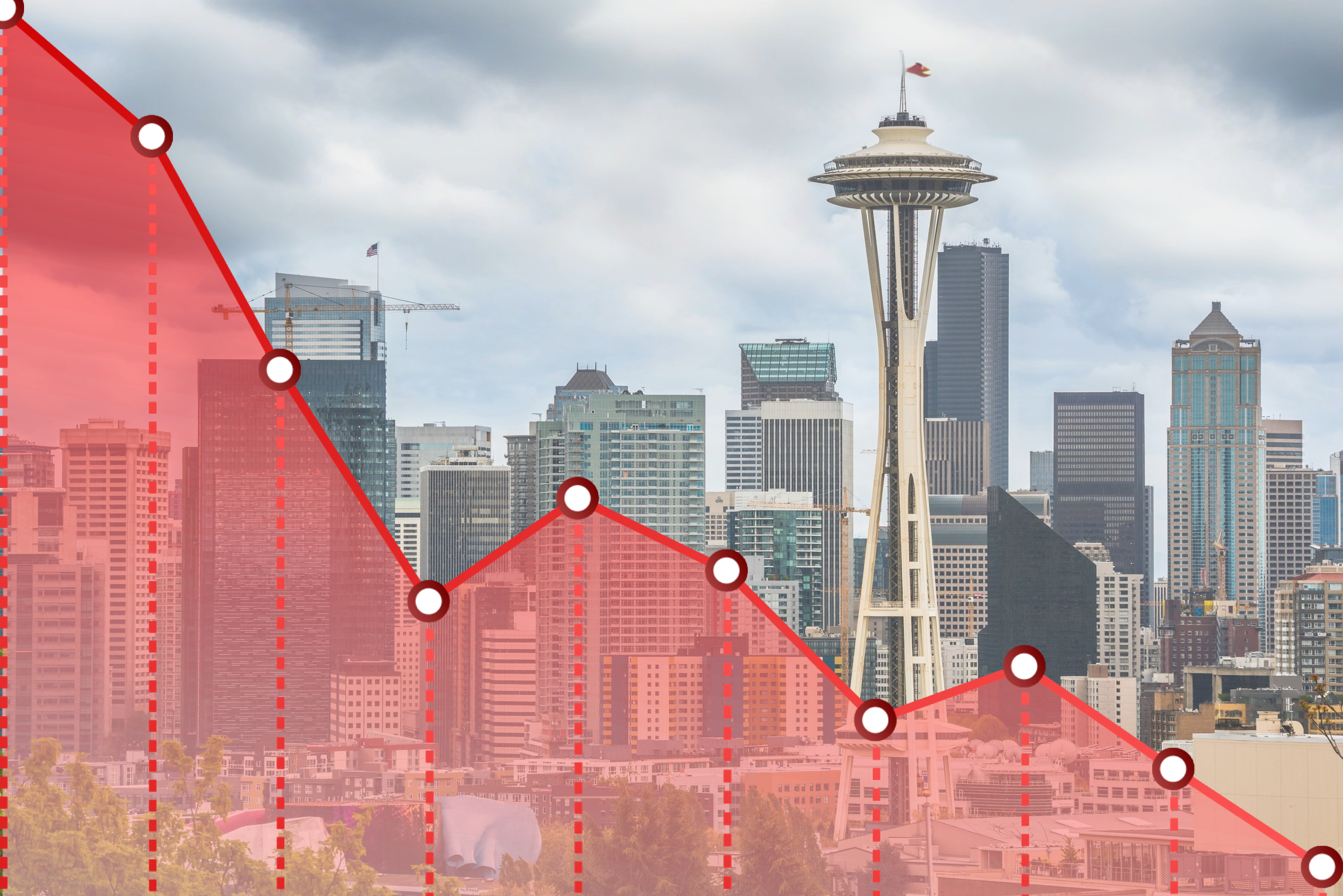




Seattle's downtown is a ghost town of empty offices, with vacancies soaring to 35% in the core of the city. Incoming Mayor Katie Wilson, an avowed Democratic Socialist, has a predictable "solution". The plan is to slap a vacancy tax on building owners who can't fill their spaces.
The proposal, floated amid a national second-worst office vacancy crisis at 26.6% citywide, aims to "nudge" owners into leasing properties faster by hitting them with financial penalties for unoccupied properties.
The policy won’t work. Common sense says if the property owners could rent the space they would. No-one willingly is losing money by leaving space vacant.
At its core, this vacancy tax embodies the worst instincts of progressive governance, using the hammer of taxation to force economic behavior rather than addressing root causes. Property owners aren't leaving offices empty out of spite. They are victims of Seattle's toxic business climate. Sky-high crime rates, open-air drug markets, and sidewalks littered with the homeless have driven companies away, making CEOs reluctant to renew leases or bring workers back downtown.
While the city has seen a positive change in a reduction in property and violent crimes recently, Wilson has indicated that the policy of the city will return to less drug enforcement which will reverse the trend.
Imagine owning a commercial building in a neighborhood where potential tenants fear for their employees' safety. You can't attract renters because of rampant theft, vandalism, and public disorder, issues the city has failed to curb significantly. Instead of incentivizing revival through tax cuts, streamlined permitting, or aggressive public safety reforms, the mayor's plan doubles down on extraction. Charging owners for vacancy is like fining a farmer for a drought. It doesn't make rain fall, but it sure makes farming harder. This approach risks accelerating capital flight, as owners sell off properties or pass costs to remaining tenants, further hollowing out the economy. Critics, including local radio host Charlie Harger, rightly decry this as a knee-jerk socialist fix that ignores economic realities.
Data shows that cities thriving post-pandemic, like those in Texas or Florida, succeeded by lowering barriers, not erecting new ones. Seattle's progressive revenue grabs have already chased away major employers. Adding a vacancy penalty could turn a slowdown into a death spiral.
True solutions start with accountability. Reduce business and occupation taxes to lure companies back. Crack down on crime to make downtown vibrant again. Ease zoning for adaptive reuse without mandates. Penalizing owners for empty spaces they can't fill isn't just unfair, it's counterproductive, ensuring more vacancies, lost jobs, and diminished tax revenues for the city. Mayor Wilson inherits a mess, but her vacancy tax would only deepen it. Washington state deserves policies that empower entrepreneurs, not extract from them.